Easter in a Puerto Rican Home Is Something Else Entirely
Growing up, Semana Santa — Holy Week — wasn't just a religious observance. It was a full production. The kitchen started on Thursday. By Saturday, the whole house smelled like sofrito, roasting pork, and something sweet cooling on the counter. Every family had their version of the classics, passed down through generations, adjusted through memory and instinct rather than written recipes.
Whether you're celebrating on the island or carrying those traditions to the mainland, Easter is one of those moments where food becomes something bigger than food. It becomes connection.
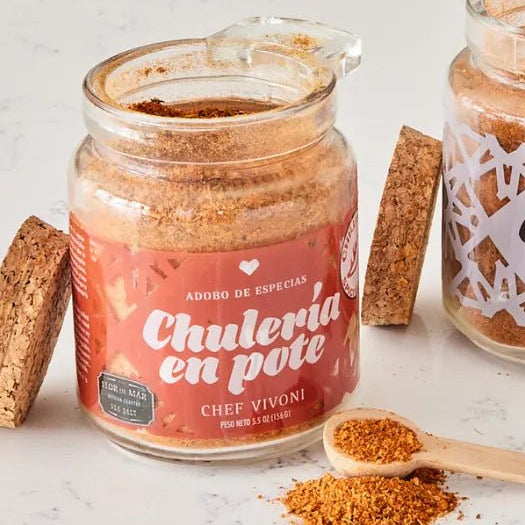
These five Puerto Rican Easter recipes are built on that tradition — and a few of them have become even better since we started cooking with Chulería en Pote.
1. Pernil al Horno (Slow-Roasted Pork Shoulder)

If there is one dish that defines Easter in Puerto Rico, it is pernil. A whole pork shoulder, marinated overnight in adobo and sofrito, then roasted low and slow until the skin turns into that unmistakable golden crackling — el cuero — that everyone fights over.
The secret is in the seasoning and the time you give it.
What you need:
1 bone-in pork shoulder (6–8 lbs)
6 cloves garlic, minced
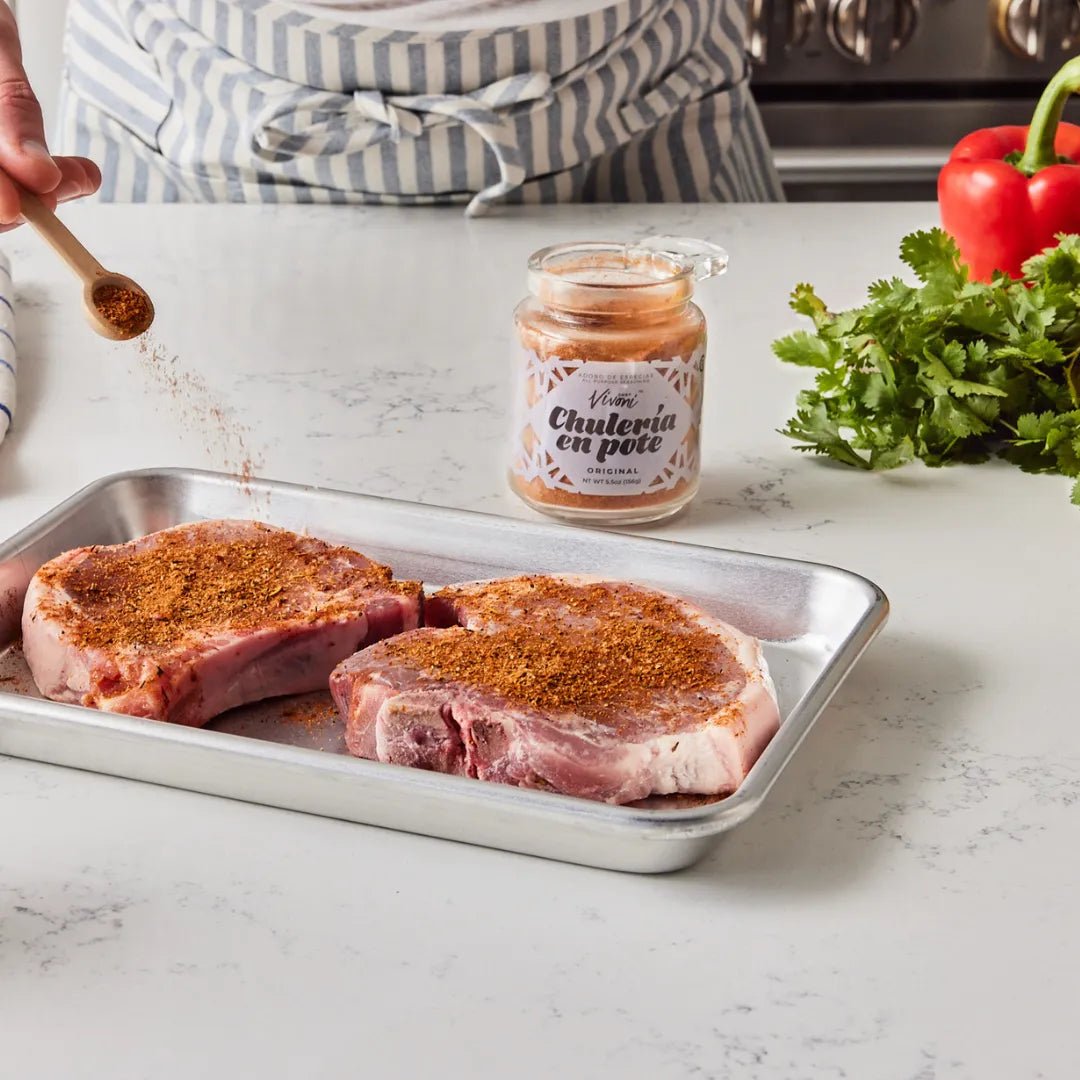
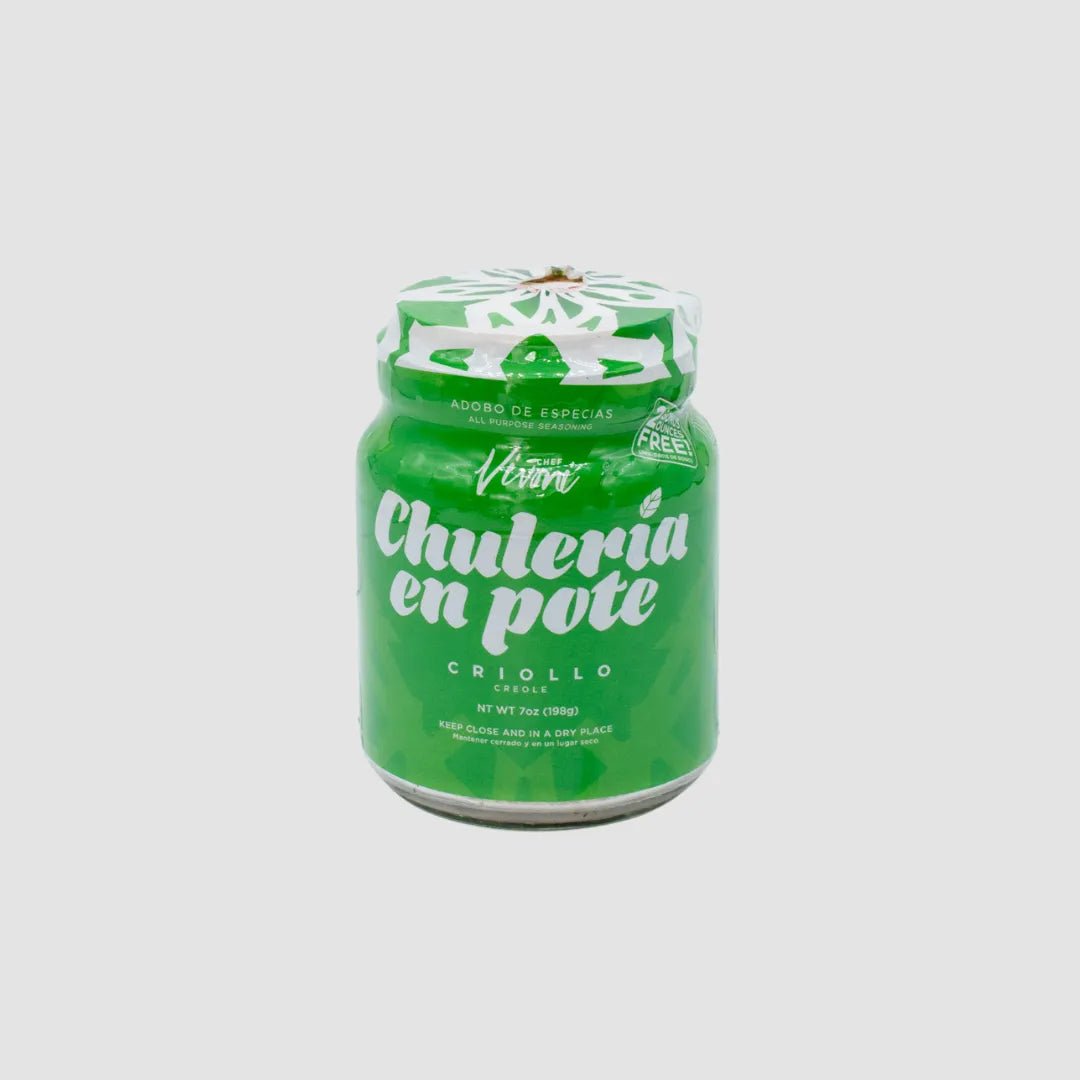
2 tablespoons Chulería en Pote Original (replaces your adobo blend entirely)
1 tablespoon dried oregano
2 tablespoons olive oil
1 tablespoon white wine vinegar
Salt to taste
How to make it:
Score the skin of the pork shoulder with deep cuts, going all the way to the bone. Mix the garlic, Chulería en Pote Original, oregano, olive oil, and vinegar into a paste. Rub it aggressively into every cut, under the skin, and all over the exterior.
Cover and refrigerate overnight — at least 12 hours, ideally 24. The longer it sits, the more the flavor penetrates.
When ready to cook, bring the pork to room temperature for 30 minutes. Roast at 325°F skin-side up for 4–5 hours, or until the internal temperature reaches 185°F and the skin is deep golden and crackling. Raise the heat to 425°F for the final 20 minutes to blister the skin.
Rest for 20 minutes before carving.
Why Chulería en Pote works here: The blend brings all the traditional adobo notes — garlic, oregano, black pepper — without needing to measure out five separate spices. It's the kind of shortcut that doesn't taste like one.
Shop Chulería en Pote Original →
Featured product
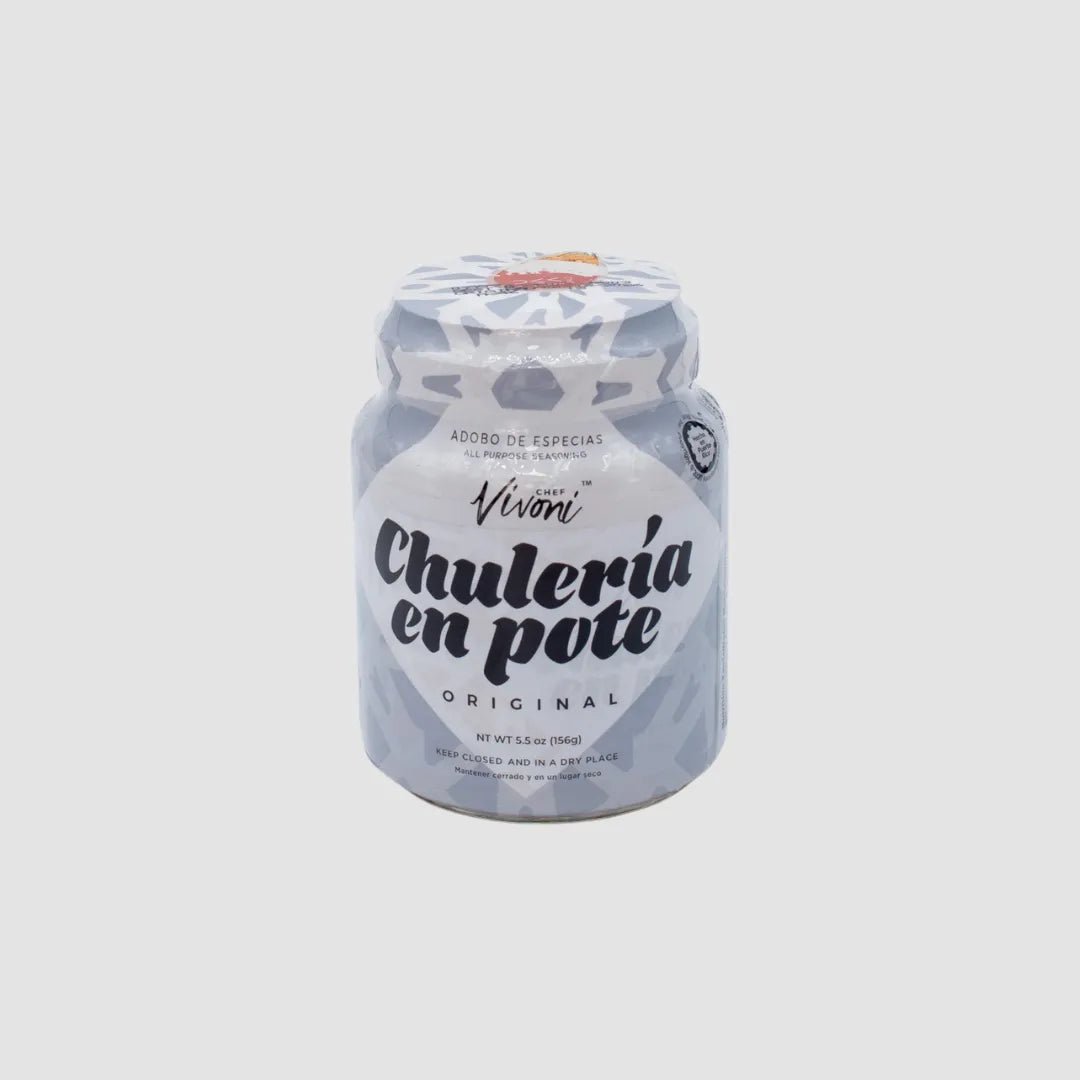
Chulería en Pote Original — $12
The all-purpose Puerto Rican seasoning that started it all. Bold criollo flavor with sazón spices, achiote, and culantro — made in Puerto Rico. Ships across the US.
Shop Original — $12 Try All 3 Flavors — $302. Arroz con Gandules (Rice with Pigeon Peas)

There is no Easter table — no Puerto Rican table, really — without arroz con gandules. The rice absorbs the sofrito, the sazón, the recao, and whatever the cook adds from years of doing it their way. Every family's version is slightly different and completely non-negotiable.
This one uses Chulería en Pote Criollo as the sazón base, which gives the rice that deep, earthy color and flavor without any artificial coloring.
What you need:
2 cups long-grain white rice
1 can (15 oz) pigeon peas (gandules), drained
2 tablespoons sofrito (homemade or store-bought)
1 tablespoon tomato paste
1 teaspoon Chulería en Pote Criollo
2½ cups chicken broth
1 tablespoon olive oil
Salt to taste
How to make it:
Heat olive oil in a caldero or heavy pot over medium heat. Add sofrito and cook for 2–3 minutes until fragrant. Add tomato paste and Chulería en Pote Criollo, stir to combine.
Add the rice and stir to coat every grain in the sofrito mixture. Add gandules and chicken broth. Bring to a boil, then reduce heat to low, cover tightly, and cook for 20–25 minutes until the rice is fully cooked and the liquid is absorbed.
Fluff with a fork. Taste and adjust salt. The bottom layer — the pegao — is a prize, not a mistake.
Shop Chulería en Pote Criollo →
Join the Hedman Soto family
Get Recipes, Tips & 15% Off Your First Order
Puerto Rican recipes, cooking guides, and early access to new products — delivered to your inbox. No spam, just flavor.
Join 500+ home cooks who get our weekly criollo cooking tips.
Subscribe & Save 15% →3. Bacalao Guisado (Stewed Salt Cod)

Good Friday is bacalao day. No pork, no meat — just salt cod, stewed with tomatoes, onions, peppers, and olives into something so deeply flavorful you almost forget it started as preserved fish.
This dish takes patience in the soaking — but the stewing itself comes together quickly.
What you need:
1 lb salted codfish (bacalao)
1 medium onion, sliced thin
1 red bell pepper, sliced
3 cloves garlic, minced
1 can (14 oz) diced tomatoes
¼ cup green olives with pimentos
1 teaspoon Chulería en Pote Original
2 tablespoons olive oil
Fresh cilantro to finish
How to make it:
Soak the bacalao in cold water for 24 hours, changing the water 3–4 times to remove the salt. Drain and shred into bite-sized pieces, removing any bones.
Heat olive oil in a wide pan over medium heat. Add onion and pepper, cook until soft, about 5 minutes. Add garlic and cook another minute. Add tomatoes, olives, and Chulería en Pote Original. Simmer for 10 minutes.
Add the shredded bacalao and stir to combine. Simmer another 10 minutes until everything is unified and the sauce has thickened slightly. Finish with fresh cilantro.
Serve over white rice or with crusty bread on the side.
Ready to try it?
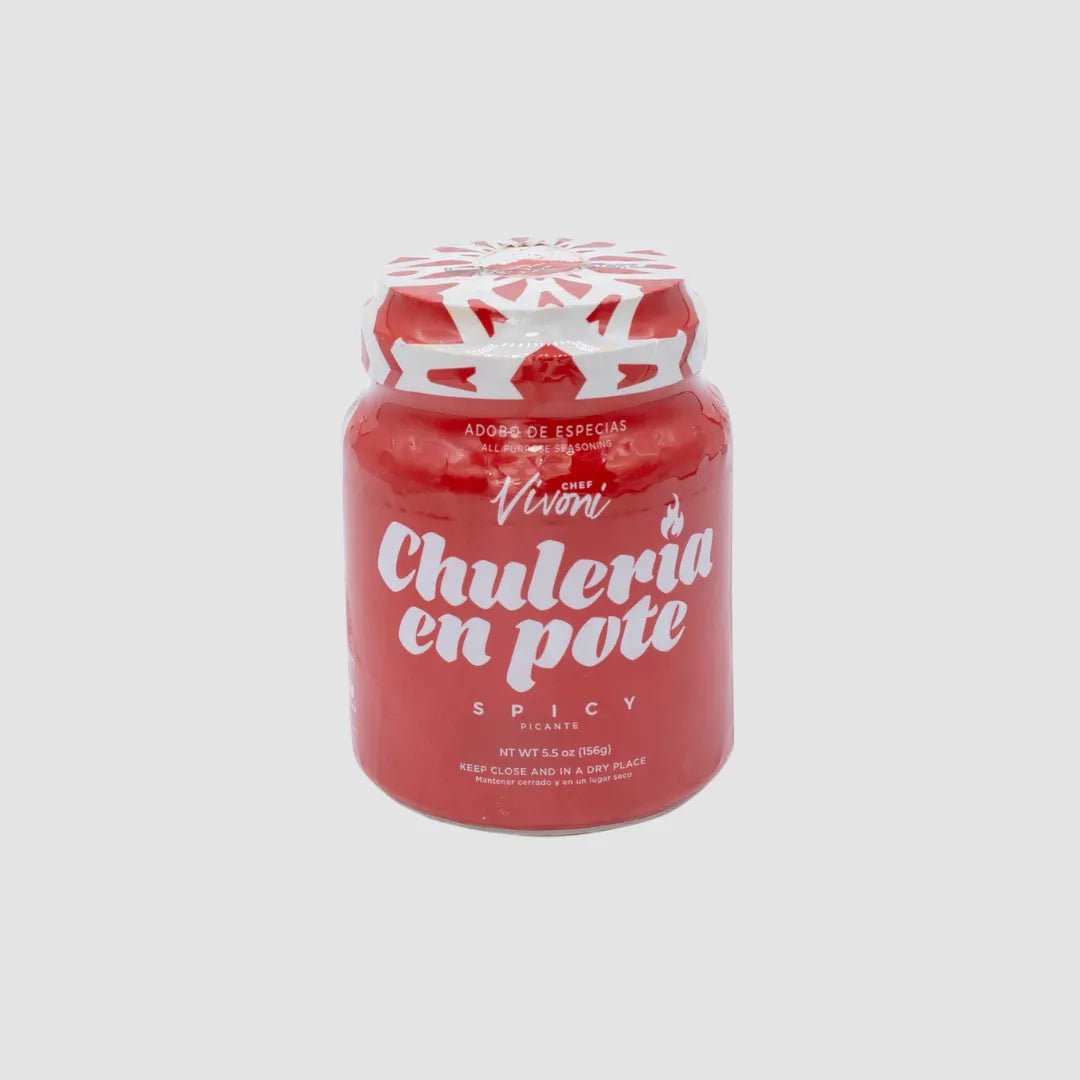
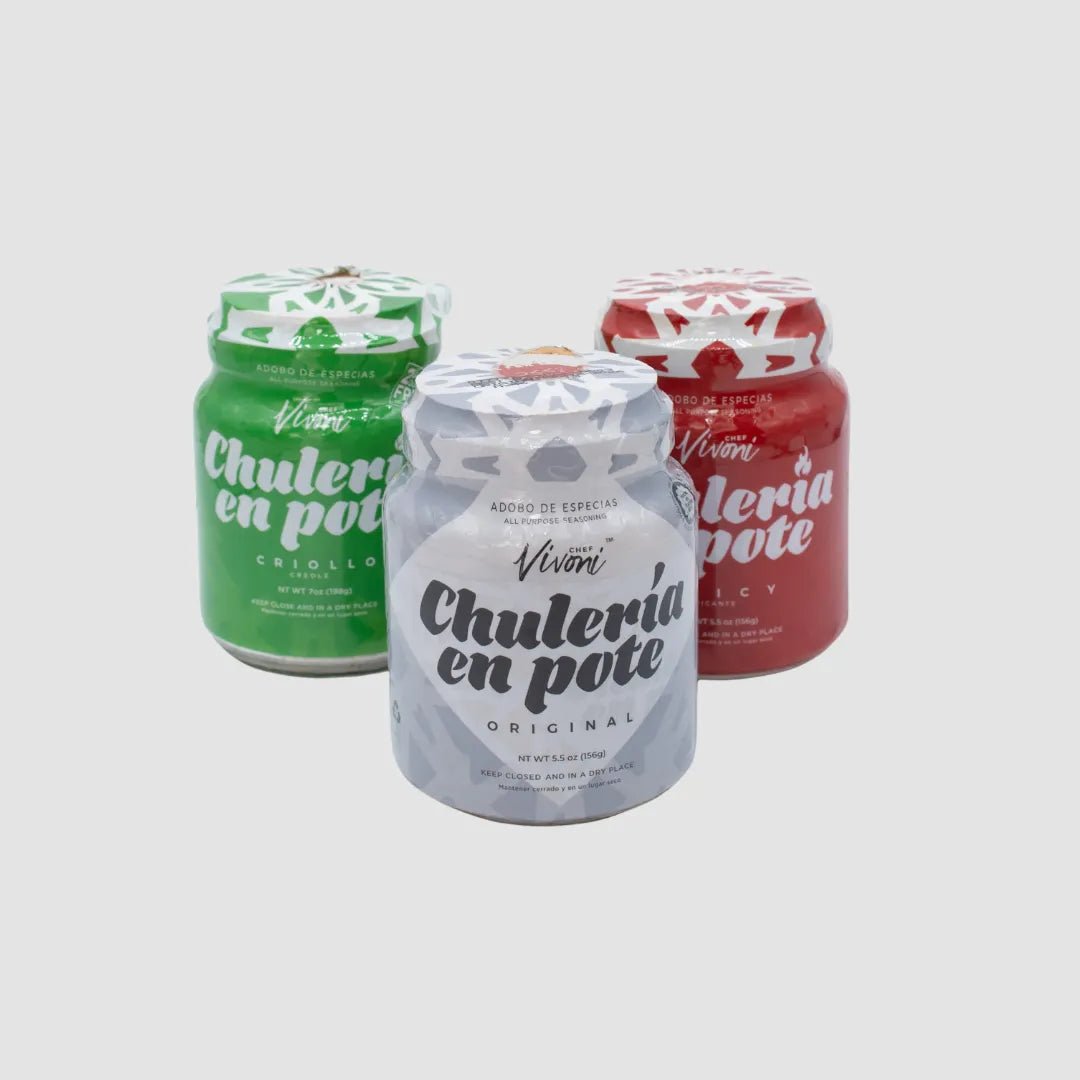
Shop Chulería en Pote Trio
Get the Trio: Original, Criollo, and Spicy. Ships across the US. Whether you're cooking pernil, arroz con gandules, or just want bold Puerto Rican flavor in every dish — this is where you start.
Trio Bundle — $30 Shop Original — $124. Pasteles de Masa (Puerto Rican Easter Pasteles)

While pasteles are most associated with Christmas, many families make them for Easter as well — especially in the center of the island, where the tradition runs deepest. The process is a family ritual as much as a recipe: everyone has a station, everyone has a job, and the kitchen fills with voices as much as aromas.
The masa here uses green bananas and yautía (taro root) as the base, seasoned throughout.
What you need:
For the masa:
4 green bananas, peeled
2 cups yautía (taro root), peeled and cubed
½ cup chicken broth
2 teaspoons Chulería en Pote Original
¼ cup achiote oil
For the filling (picadillo):
1 lb ground pork
2 tablespoons sofrito
1 teaspoon Chulería en Pote Spicy (for heat) or Original (for classic)
½ cup tomato sauce
¼ cup olives and capers
How to make it:
Grate the green bananas and yautía on the fine side of a box grater (or pulse in a food processor). Mix with chicken broth, Chulería en Pote Original, and achiote oil until a smooth, seasoned dough forms.
For the filling, brown ground pork in a pan, add sofrito, Chulería en Pote, tomato sauce, olives, and capers. Cook until thick and fragrant, about 15 minutes.
Spread masa onto banana leaves or parchment paper. Add a spoonful of filling. Fold and tie securely. Boil in salted water for 45 minutes to 1 hour.
Tip: Make a large batch and freeze half. They keep beautifully for up to three months.
Shop the Chulería en Pote Seasoning Trio →
5. Tembleque (Coconut Pudding)

After the pernil, the rice, the bacalao — the table needs something cool, sweet, and simple. Tembleque is Puerto Rico's answer to that moment. A coconut milk pudding set firm enough to unmold, dusted with cinnamon, trembling slightly when you carry it to the table — hence the name.
It requires almost no effort and almost always gets the most compliments.
What you need:
2 cans (13.5 oz each) coconut milk
½ cup sugar
½ cup cornstarch
¼ teaspoon salt
Ground cinnamon for garnish
How to make it:
Whisk together the coconut milk, sugar, cornstarch, and salt in a medium saucepan until the cornstarch fully dissolves — no lumps.
Cook over medium heat, stirring constantly, until the mixture thickens and begins to pull away from the sides of the pan, about 10–12 minutes. Do not stop stirring or it will scorch.
Pour into a lightly greased mold or individual ramekins. Let cool to room temperature, then refrigerate for at least 4 hours or overnight.
Unmold onto a plate, dust generously with ground cinnamon, and serve chilled.
This is the dessert that makes people go quiet at the table. That's always a good sign.
The Table Is the Point
Every one of these recipes is a reason to gather. The pernil takes overnight. The pasteles take a full afternoon and an extra pair of hands. The tembleque needs to chill until tomorrow. Puerto Rican Easter cooking is not fast food — it is intentional food, made with time and care and the understanding that the people around the table are worth it.
At Hedman Soto, that's what we're here for. Products that make the cooking better, and a community that keeps these traditions alive.
From our kitchen to yours — ¡Felices Pascuas!