By Hedman Soto · Recipes · 12 min read
The Quick Answer
Pernil is a slow-roasted Puerto Rican bone-in pork shoulder, marinated for at least 24 hours with a wet adobo paste of garlic, oregano, black pepper, salt, and olive oil — pushed deep into cuts in the meat so the seasoning reaches every fiber, not just the surface. The skin (cuero) is salt-bathed to dry it out and scored to crisp during the final high-heat blast. The result: meat that pulls apart with a fork, and skin that shatters when you bite it. The most common misconception: pernil is not dry pork. The skin is meant to be dry-crispy. The meat is meant to be juicy.
My earliest memory of pernil involves a whole pig on a table.
My dad used to raise pigs on our property in Aguadilla — tons of them. We raised them, sold them, ate them. I was around 8 years old when I walked into our outdoor test kitchen and there it was: a full pig, split open, my dad standing over it with his hands deep in seasoning. The smell of the marinade was delicious. The pig… split open like that, at 8 years old, was a bit traumatizing. But hours later, when that thing came out of the roast, golden and crackling and juicy — I forgot the trauma immediately. DELICIOUS.
Cooking has always been my dad's passion. His pernil, and my mom's pernil, are the gold standard I'm still chasing. This guide is everything they taught me — the rules they never break, the technique that makes the cuero crackle, and the year-round ritual that this dish has become for me in Brooklyn, far from the Aguadilla yard where it started.
What makes Puerto Rican pernil different
Pernil is a slow-roasted bone-in pork shoulder. It is not pulled pork. It is not carnitas. It is not lechón (though lechón is its spit-roasted cousin). The difference is in the technique: where most slow-cooked pork seasons the surface, Puerto Rican pernil seasons the inside.
The preparation starts at least 24 hours before the oven turns on. You cut deep slits directly into the flesh — top, sides, bottom — and push a wet garlic-oregano paste into every crevice. By the time you slide it into the oven, every fiber of that shoulder has been marinating in the seasoning for a full day. That's why a real pernil tastes seasoned all the way through, not just on top.
The other distinguishing feature: the cuero. The skin stays on through the entire cook, gets salt-bathed beforehand to draw out moisture, and crisps under high heat at the end. Done right, the cuero shatters when you bite it. Done wrong, it stays rubbery. We'll cover the technique below.
Mom's pernil vs Dad's pernil — the two-recipe house I grew up in
Here's a detail you won't find in most pernil recipes: my mom and dad each make pernil their own way, and they're both perfect.
Dad's version: heavier on black pepper. He cracks it fresh, never pre-ground, and he's not shy about it. His pernil has more bite, more warmth on the back of the tongue.
Mom's version: heavier on garlic. She'll use 12-14 cloves where most recipes call for 8. The garlic mellows during the long roast, but it sets a deeper foundation. Her pernil tastes more rounded, more savory.
When someone in our extended family hears there's pernil in the oven at my parents' house, everyone shows up. Doesn't matter whose version. Doesn't matter the occasion. Both Mom's and Dad's pernil pair perfectly with arroz con gandules — and my mom makes that with sazón and recao from her garden, which is its own story.
In Hedman's Words
"Pernil is not dry pork. The skin is dry — that's the point. The meat is supposed to be juicy, flavorful, falling off the bone. If yours came out dry, somebody marinated for 12 hours instead of 24, or rushed the rest."
The 5 essential pernil seasonings
Before we get to technique, let's talk ingredients. Real Puerto Rican pernil seasoning is built on five pillars:
- Garlic. A lot of it. Fresh, minced or mashed into a paste. This is non-negotiable. Count on at least 10-12 cloves for a 6-7 lb shoulder. My mom uses more.
- Dried oregano. Puerto Rican oregano (orégano brujo) is stronger and more pungent than Italian. If you can find it, use it. If not, standard dried oregano works. Mexican oregano is also a solid sub.
- Black pepper. Freshly cracked. Not pre-ground. This is the heat backbone — my dad's version. Don't be shy.
- Salt. Kosher salt or sea salt. You need enough to cure the surface and drive flavor into the meat. We'll also use extra salt for the cuero treatment.
- Olive oil + a citrus. The wet base for the paste. Olive oil binds everything; a squeeze of lime or sour orange brightens it. Some families use both.
Some families add adobo directly to the rub. Some use a sazón packet for color and depth. Some skip the citrus. My mom keeps it pure — just the five above. My dad sometimes adds a teaspoon of cumin. Use what your family uses, or make it yours.
The 24-hour rule (the single most-broken rule in American pernil recipes)
If you take one thing from this article, take this: pernil needs to rest with the seasoning for more than 24 hours. Ideally 48.
Most American recipes that call pernil "easy" or "weeknight-friendly" cut this to 4-6 hours. That's not pernil. That's a marinated pork shoulder. The 24-hour minimum is what lets the garlic and oregano penetrate the deep cuts you made in the meat. It's what lets the salt cure the surface and pull the seasoning inward. Skip the 24 hours and your pernil will taste good on the outside and bland inside — which is the most common reason American versions taste flat.
My parents marinate for 48 hours every Christmas Eve. The shoulder goes into the fridge on the 23rd, the seasoning paste packed into every cut, covered with plastic wrap. It comes out on the morning of the 24th to roast all day. That's the rhythm.
How to get the crispy cuero (the salt bath technique)
The crackling cuero is the part everyone fights over. Two techniques make it crack instead of bend:
1. Bathe the skin in salt. Before any seasoning, rub the skin generously with coarse salt — kosher or sea salt — and let it sit uncovered in the fridge for several hours (or overnight). The salt pulls out the moisture in the skin. Pat it bone-dry before applying any seasoning. Moisture is the enemy of crispy cuero. This is the most common reason pernil cuero comes out rubbery.
2. Cut the skin from the meat (partially). Score the skin in a diamond or crosshatch pattern, cutting through the skin and fat layer but NOT into the meat. This lets the fat render out during cooking and creates surface area for the crackle. Once the skin separates slightly from the meat during the high-heat finish, that's when the cuero shatters under the knife.
Pro Tip — Cuero Drama
Who gets the first piece of cuero? Whoever did the cooking.
In our family the rule is simple: the chef gets first stab. There's always a fight for the last piece. My partner is Italian from Jersey, and when my mom is visiting the two of them go after the cuero like it's an inheritance. Who steals the last piece from the other is part of the meal at this point. It's funny to watch — and it's also one of the ways food becomes a bridge between cultures. Pernil isn't just about pork. It's about everyone showing up for it.
Family Recipe
My Mom and Dad's Pernil
This is the recipe I'm still chasing every time I make pernil in Brooklyn. My parents do it by eye and by feel. These measurements are my best translation into a written recipe — adjust by taste once you've made it a few times.
Ingredients (for a 6-7 lb bone-in pork shoulder)
- 1 bone-in pork shoulder, 6-7 lbs, skin on
- 10-12 garlic cloves, minced or mashed into a paste (Mom's version: 12-14)
- 2 teaspoons dried oregano (Puerto Rican orégano brujo if you can find it)
- 1 teaspoon freshly cracked black pepper (Dad's version: 1.5 teaspoons)
- 1.5 teaspoons kosher salt — for the paste
- 2-3 tablespoons coarse kosher salt — for the skin (separate)
- 3 tablespoons olive oil
- Juice of 1 lime or sour orange
- Optional: 1 teaspoon cumin (Dad sometimes adds this)
Instructions
- Salt-bathe the skin first. Pat the pork shoulder completely dry. Rub the skin generously with coarse salt. Leave uncovered in the fridge for 4-6 hours, ideally overnight. This dries the cuero for max crisp.
- Score the skin. Pat the skin dry again. Score in a diamond pattern (1/4 inch deep cuts), cutting through skin and fat but NOT into the meat below.
- Make the seasoning paste. In a bowl, combine garlic, oregano, black pepper, the 1.5 tsp salt, olive oil, lime juice, and optional cumin. Mix into a thick, fragrant paste.
- Score the meat (NOT the skin side). Flip the shoulder. Make deep 2-3 inch cuts all over the meat side, the underside, and the rounded sides. More cuts = more flavor.
- Season aggressively. Push the paste into every cut. Massage the rest all over. Light layer on the salted skin side.
- Marinate at least 24 hours. 48 is better. Cover with plastic wrap. Refrigerate. Do not skip this step.
- Roast low and slow. Preheat oven to 325°F. Place shoulder skin-side up in a roasting pan with 1/2 cup water. Cover with foil. Roast ~45 minutes per pound. For a 6-7 lb shoulder, that's roughly 5-6 hours.
- Crisp the cuero. Remove foil. Raise oven to 400°F. Roast another 45-60 minutes until skin is golden, blistered, and crackling. Watch closely the last 15 minutes — it goes from perfect to burned fast.
- Rest before serving. Let rest at least 20 minutes. Cutting too early is the most common mistake — the juices need to settle back into the meat. Drizzle pan drippings over the plate.
Serves 8-10. Leftover pernil makes the best sandwiches the next day — on a roll with a smear of mayo, slices of avocado, and a sprinkle of the cuero on top.
Pernil vs lechón vs carnitas — what's actually different
Slow-cooked pork shows up across many cuisines, and the names get confused. Here's the real breakdown:
All slow pork. All built on patience. But pernil's signature — and what separates it from every other slow pork dish — is the 24-hour wet marinade pushed into deep cuts in the meat, paired with that shatter-crisp cuero.
Pernil isn't just for Christmas (it's a year-round thing)
In a lot of American writing about Puerto Rican food, pernil shows up only in the Christmas Eve / Nochebuena context. That's where it's most iconic — the centerpiece of the spread alongside arroz con gandules, pasteles, coquito, and the whole family in one room. But in real Puerto Rican life, pernil shows up all year.
I make pernil at our beach house in Asbury Park at least four times a year. Memorial Day weekend. Fourth of July. Random Sundays when my partner's family comes down. It's the way I show our culture with a traditional dish — a dish that requires planning (the 24-hour marinade), patience (the 5-6 hour roast), and people (because you cannot eat a 6-pound shoulder alone).
Pernil is one of those dishes that turns a regular Sunday into an event. The smell alone — garlic, oregano, slow-roasting pork — pulls people into the kitchen.
Brooklyn pernil — the Aguadilla recipe in a city kitchen
I've been trying to replicate my parents' pernil for years, and I'll admit something: I'm not always there yet. I'm not a trained chef. I've worked around food my whole life (at Milk Bar, at Jet.com supply chain, at Jonathan Adler before that), but cooking pernil at my parents' level is still a moving target.
Part of it is the ingredients. Garlic at a Brooklyn grocery is not garlic from my mom's backyard. The pork cuts at American supermarkets are not the same as what my dad cuts at home. Even the oregano hits differently when it's been dried in Aguadilla sun versus shipped from a warehouse.
The bigger part is the recipe itself. My parents cook by eye, by taste, by the way the paste sticks to the meat. Their pernil isn't measured in tablespoons. It's measured in instinct — built over decades of making the same dish week after week. Translating that into measuring cups is impossible. The best I can do is approximate, get close, and trust that after enough attempts my own pernil will start to taste like theirs.
If you're cooking pernil in a city kitchen far from where the dish originated, the same probably applies to you. Use the recipe above as a starting frame. Adjust the ratios to your taste. Add more garlic the second time. Pull back the salt the third. Make it yours.
What other Puerto Rican families say about each other's pernil (the gossip)
We are Puerto Rican. We love the gossip. There's always something to say about somebody else's pernil:
- "They didn't season it well."
- "Missing salt."
- "Too much pepper."
- "It needed more garlic."
- "They undercooked it — look how pale the inside is."
- "The cuero is rubbery, they skipped the salt bath."
- "Did they only marinate it for a day? You can taste it."
I'll say what I really think: at my parents' house, the pernil is perfect. Not because they're my parents. Because they've been making it for 50+ years and they are the objective experts on seasoning meat the Puerto Rican way. If you can find a Boricua who's been making pernil that long, ask them. They'll tell you straight what works.
What to serve with pernil
Pernil doesn't show up alone. The Nochebuena spread (or your version of it) usually looks like this:
- Arroz con gandules — Puerto Rican rice with pigeon peas. Built on recao, sofrito, and sazón. The classic pernil pairing.
- Tostones — twice-fried green plantains. Crispy, salty, perfect with the pork drippings.
- Ensalada de papa — Puerto Rican potato salad, creamy, slightly sweet, with red apple and ham mixed in.
- The pan drippings — drizzle over the rice and the meat. Don't waste them.
- Pique — Puerto Rican vinegar-based hot sauce on the side for those who want heat.
- Coquito — Puerto Rican coconut eggnog for after dinner. Christmas only, ideally.
The Shortcut My Dad Would Approve Of
When you can't replicate Mom and Dad's by-eye magic
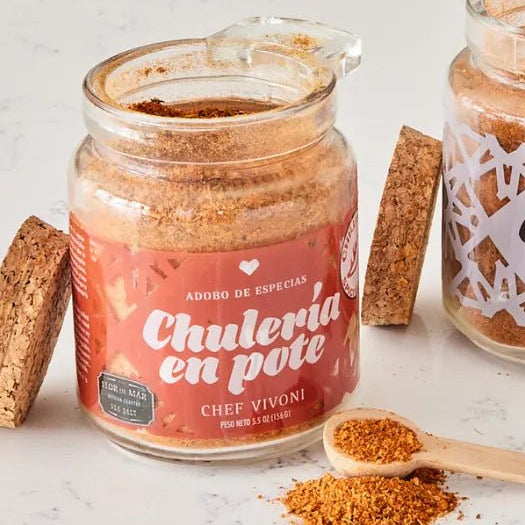
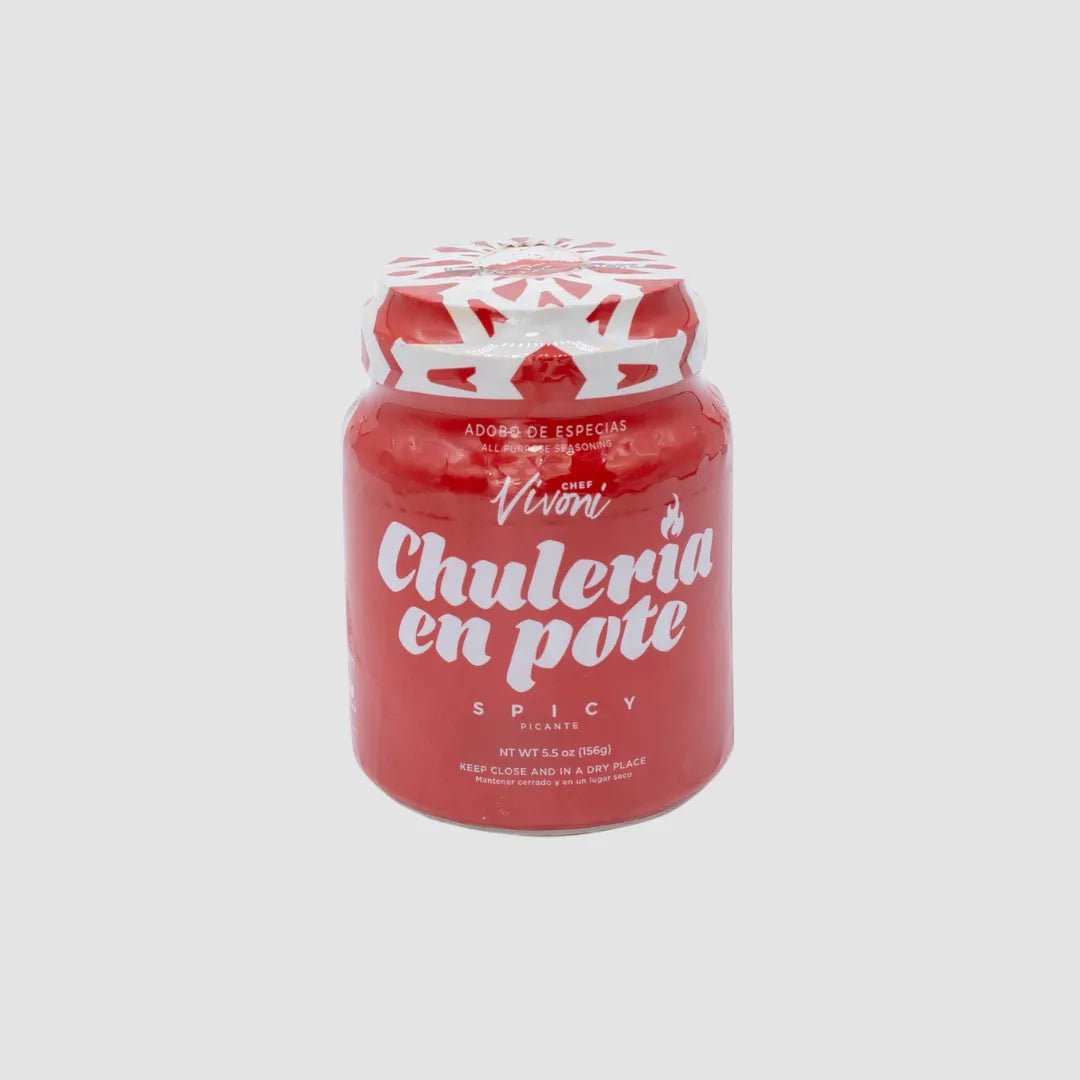
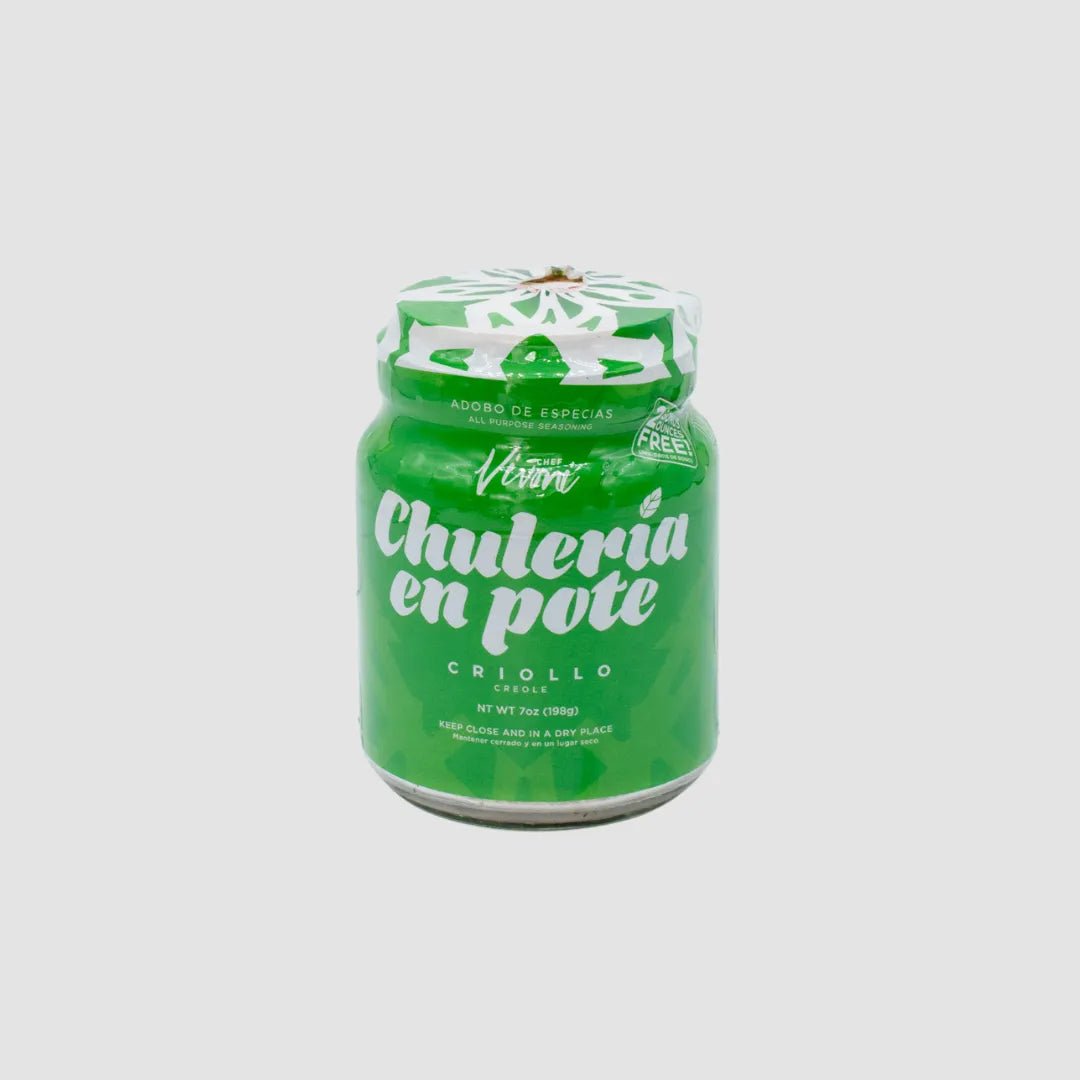
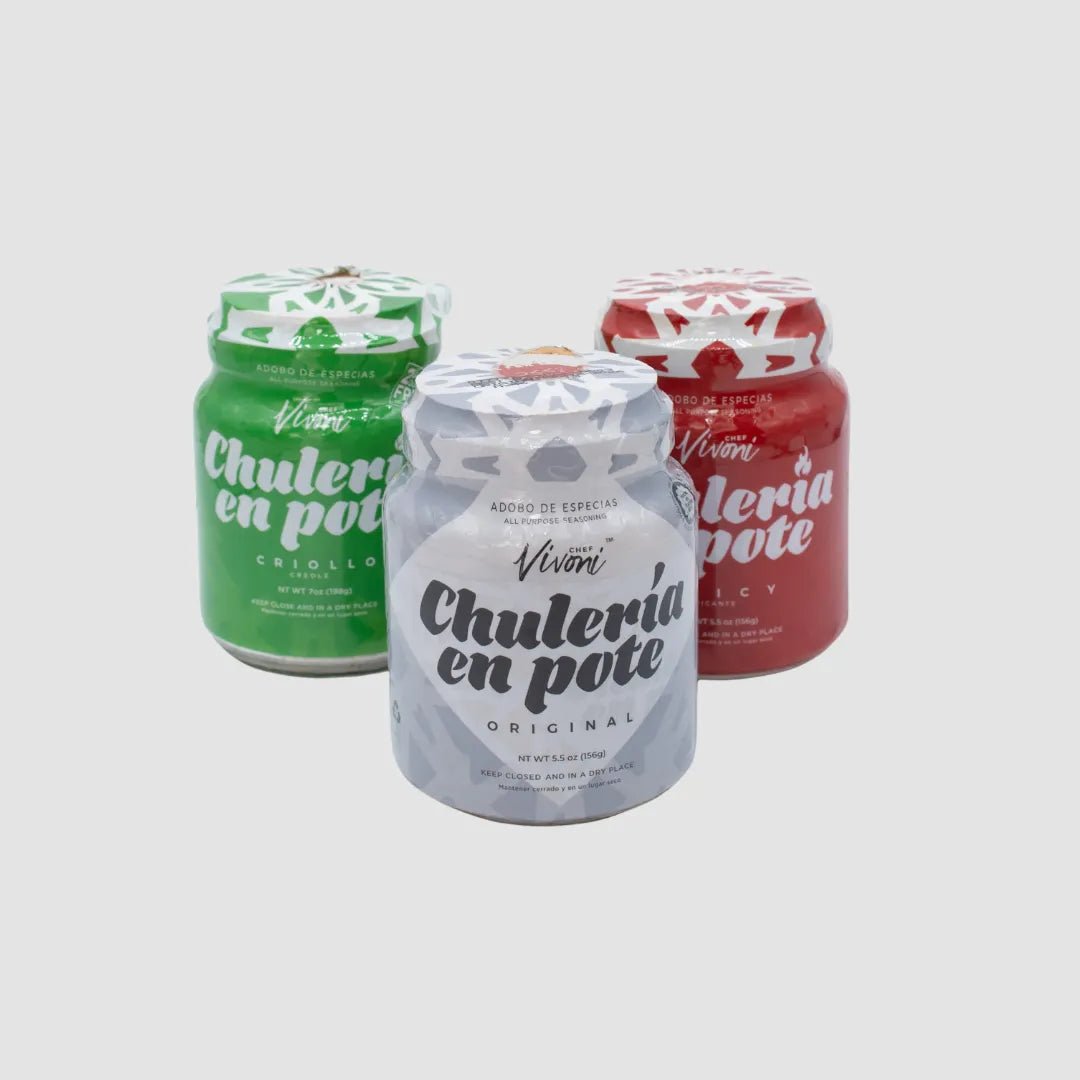
Chef Vivoni's Chulería en Pote is the seasoning I add to my pernil paste when I'm trying to get closer to my parents' flavor without the years of practice they have. Chef Vivoni's own adobo — salt, paprika, turmeric, onion, garlic and a little coffee, packed in Puerto Rico. Use it as 2-3 tablespoons in the paste, in addition to your garlic and pepper.
Shop Chuleria en Pote →Pernil FAQs
What is pernil?
Pernil is a slow-roasted Puerto Rican bone-in pork shoulder, marinated for at least 24 hours with a wet adobo paste of garlic, oregano, black pepper, salt, and olive oil pushed deep into cuts in the meat. The skin (cuero) is salt-bathed and crisped at the end of roasting. The meat comes out juicy and pulls apart with a fork; the skin shatters when bitten.
How long should pernil marinate?
At least 24 hours, ideally 48. The single most common mistake in American pernil recipes is cutting this to 4-6 hours. The full 24-48 hours is what lets garlic and oregano penetrate the deep cuts in the meat, so the pork tastes seasoned all the way through instead of just on the surface.
Why is my pernil dry?
Pernil meat is not supposed to be dry. Only the skin (cuero) is meant to be dry-crispy. If your meat came out dry, the most likely reasons are: you used a boneless shoulder (the bone keeps moisture in), you didn't add water to the pan during roasting, you marinated less than 24 hours, or you cut into the meat before letting it rest for 20 minutes. Real pernil meat is juicy, flavorful, and falls off the bone.
How do I get crispy cuero (pernil skin)?
Two techniques: (1) salt-bathe the skin before seasoning. Rub coarse salt on the skin and leave uncovered in the fridge for several hours to draw out moisture. Pat completely dry before applying any seasoning. (2) Score the skin in a diamond pattern, cutting through skin and fat but not into the meat. During the final high-heat blast (400°F for 45-60 min after low-roasting), the skin will blister and crackle. Moisture on the skin is the enemy of crispy cuero.
What is the difference between pernil and lechón?
Pernil is a slow-roasted bone-in pork shoulder cooked in an oven, typically 6-7 lbs. Lechón is a whole pig spit-roasted over wood or coals, often weighing 40-80 lbs. Both share the same seasoning approach (garlic, oregano, salt, deep marinade) but lechón takes a full day over open flame and feeds large gatherings. Pernil is the home-kitchen version.
Can I make pernil with a boneless pork shoulder?
Yes, but the result is not as good. The bone keeps the meat moist during the long roast and adds flavor through the cook. If you can only find boneless, reduce the roast time slightly (start checking at 35 minutes per pound) and add an extra cup of water to the pan to prevent dryness. Bone-in is the traditional and better choice if you can find it.
How many people does a pernil feed?
A 6-7 lb bone-in pork shoulder feeds 8-10 people generously as a main, with leftovers for sandwiches the next day. For larger gatherings, scale up: a 10-12 lb shoulder feeds 14-18 people, but the cook time increases proportionally (still about 45 minutes per pound at 325°F).
Is pernil only for Christmas?
Pernil is most famously the centerpiece of Puerto Rican Nochebuena (Christmas Eve), but in real Puerto Rican life, pernil shows up all year — at birthdays, family gatherings, summer cookouts, and random Sundays. It's a special-occasion dish because of the planning required (24-hour marinade plus 5-6 hour roast), but it's not restricted to any one holiday.
Keep Reading
About the author: Hedman Soto is the founder of Hedman Soto, a chef-curated Latin pantry brand featuring Chef Vivoni's Chulería en Pote seasonings and Chef Rafael Ubior's Made By Cooks sauces. He grew up in Aguadilla, Puerto Rico in a family that raised pigs and ran bakeries, and now splits his time between Brooklyn, NY and Asbury Park, NJ. He writes about Latin food from a founder and home cook perspective.