By Hedman Soto · Food Guides · 14 min read
The Quick Answer
Adobo and sazón are the two seasonings in nearly every Latin kitchen — Puerto Rican, Dominican, Cuban, Mexican, and beyond. They are not the same and not interchangeable. Adobo is a dry rub of garlic, oregano, salt, and pepper that goes on the meat before cooking. Sazón is a color and depth builder centered on achiote (annatto) that goes in the dish — into rice, beans, stews, marinades. Most Latin home cooks use both for the same recipe: adobo on the chicken or pork, sazón in the rice or the broth. Together they create the layered flavor that makes Latin food taste like Latin food.
Adobo has been bought in bulk in my house since I have memory.
Same with sazón. Both jars and packets came home from the supermarket in quantity, week after week, because nothing my mom or dad cooked happened without one or both of them. This is not just a Puerto Rican thing — every Latino household I have ever been inside, from Dominican to Cuban to Mexican to Colombian, has both adobo and sazón sitting on the counter or in a cabinet right next to the stove. They are pan-Latin pantry staples.
And yet the question I get asked most by non-Latin friends is some version of: "Wait — what's actually the difference between these two?" I have to sit them down and explain each one. This article is that explanation, written down so you can stop guessing in the grocery store aisle and start using both with intention. By the time you finish, you will know exactly what each one is, when to reach for which, what to buy, and how to make your own from scratch if you want to.
What is adobo?
Adobo is a dry all-purpose seasoning blend. The name comes from the Spanish word adobar, meaning "to marinate" — itself derived from the Old Spanish adobado, a method of preserving meat by salting and spicing it. Latin cooks have been making and using adobo for generations — long before the commercial jar of Goya Adobo arrived in 1966 and made it the household staple it is today.
The classic formula is simple:
- Salt — the foundation, usually the first ingredient by weight
- Garlic powder — the universal Latin flavor base
- Onion powder — adds aromatic depth
- Black pepper — heat backbone
- Dried oregano — Mediterranean or Mexican; both work
- Turmeric — for a subtle warm color (some variants only)
Adobo goes on things. You rub it directly on chicken before it hits the grill. On a pork shoulder the day before pernil goes in the oven. On chuletas before they hit the cast iron. On tostones after they come out of the fryer. Even on scrambled eggs, if that is your move (it is a lot of people's move).
What adobo tastes like: garlic-forward, salt-forward, with herbal warmth from the oregano and a faint bite from the black pepper. It is the flavor most Americans associate with "Latin chicken" or "Latin pork" without realizing they are tasting adobo specifically.
What adobo does: seasons and flavors. It builds the base layer of taste that everything else builds on top of.
What adobo does not do: give your dish the signature warm golden-orange color you see in arroz con gandules or yellow rice. That is sazón's job.
What is sazón?
Sazón is a spice blend built around one ingredient adobo does not have: achiote, also called annatto. Achiote is a seed from a tropical tree native to the Americas. The Taíno — the indigenous people of Puerto Rico and the Caribbean — used it for centuries before Spanish colonization, both as a food coloring and a medicinal.
In the kitchen, achiote does two things: it gives food that deep orange-golden hue that makes arroz con gandules look the way arroz con gandules is supposed to look, and it adds a subtle earthy warmth that sits underneath everything else.
A typical sazón blend includes:
- Ground achiote (annatto) — the color and earthy base
- Cumin — earthy and warm, savory backbone
- Coriander — citrusy and light, cuts the richness
- Garlic powder — the universal Latin flavor base
- Oregano (Mexican is preferred) — earthier than Mediterranean
- Salt — always
Sazón goes in things. You stir it into your sofrito as it cooks in hot oil. You sprinkle it into the rice at the start. You add it to stews, beans, and guisos. It blooms in heat and fat — that is when the color releases and the flavor opens up.
What sazón tastes like: earthy, warm, slightly bitter from the achiote, with cumin warmth and a faint citrus lift from the coriander. On its own a pinch tastes almost medicinal — it needs to bloom in oil to come alive.
What sazón does: colors and deepens. It gives you that signature golden hue and the warm earthy base for rice, stews, and beans.
What sazón does not do: work as a standalone dry rub on a piece of meat the way adobo does. If you tried, the achiote would dominate everything else.
For the full deep dive on sazón specifically — ingredients, history, recipes, and how to make your own from scratch — see our complete guide to sazón.
In Hedman's Words
"In my house, both get used together almost every time. Sazón goes in for color and a little extra salt. Adobo goes on for that classic taste. One on the meat, one in the pot. That's the rhythm."
How my parents use them together — the combo rule
Here is the thing that most adobo-vs-sazón articles miss: in real Latin cooking, you almost never use just one. You use both. The question isn't "which should I pick." The question is "in what role do I use each one for this dish."
In my family's kitchen — Aguadilla, then Brooklyn — the rule is simple:
- Sazón goes IN the dish for color and a touch of extra salt. Rice, beans, the broth of a stew, the cooking liquid for any guiso.
- Adobo goes ON the meat for that classic Latin taste. The dry rub that hits the surface of whatever protein you are cooking.
Take a Sunday Puerto Rican meal — pernil with arroz con gandules — as the canonical example. My mom and dad will adobo the pork shoulder the day before. Then while the pernil is roasting, they will start the rice in a separate pot: sofrito sautéed in oil, sazón stirred in for color and depth, and finally the rice and pigeon peas added. Adobo on the pernil. Sazón in the rice. Both seasonings, doing their separate jobs, in the same meal. Once you understand this rule, almost every classic Latin dish makes sense. Habichuelas guisadas? Adobo on any meat that goes in (chorizo, ham, salt pork), sazón in the bean broth. Asopao? Adobo on the chicken, sazón in the rice-and-broth base. Pollo guisado? Adobo on the chicken pieces, sazón in the simmer liquid.
Adobo vs sazón — the side-by-side breakdown
Here is the full comparison in one table. Bookmark this section — it is the cheat sheet most people are looking for when they search "adobo vs sazón."
The short version: sazón goes in the dish, adobo goes on the meat. Most Latin households use both for the same recipe.
When to use which — a dish-by-dish cheat sheet
Here is what to reach for, dish by dish. If a dish has both meat and a starch/liquid component, you will see both seasonings show up in their separate roles.
How different Latin cultures use them
Both adobo and sazón cross every Latin border in the U.S. — but each culture has its own slight twist on usage. Here is the cross-cultural breakdown.
Puerto Rico
Adobo on every protein. Sazón in every rice and bean dish. Both used together in the canonical Sunday spread — pernil, arroz con gandules, habichuelas, tostones. Puerto Rican cooks layer them with recao-based sofrito for maximum depth.
Dominican Republic
Dominicans love adobo as much as Boricuas do — maybe more. It goes on everything: pollo guisado, chuletas, pescado frito. Sazón shows up in arroz amarillo, in moros (rice and beans), and in la bandera (the daily Dominican meal of rice, beans, and meat). Dominican home cooks often mix sazón directly into sofrito as part of the same step.
Cuba
Cuban cooks use adobo and sazón but lean more heavily on the sofrito itself (oil, onion, garlic, green pepper, tomato) as the flavor base. Sazón appears in arroz amarillo and Moros y Cristianos. Adobo seasons proteins for dishes like ropa vieja, lechón, and palomilla steak. Cubans are also more likely to make a wet adobo paste (with sour orange juice and olive oil) for marinating lechón.
Mexico
Adobo exists in Mexican cooking too — both as a dry seasoning blend (often used on grilled meats and seafood) and as a deeper sauce-based adobo for dishes like adobada (achiote-marinated pork). Mexican cooks reach for sazón less often as a packet — they get color from dried chiles, achiote paste (cochinita pibil), and regional spice blends. But Mexican-American kitchens absolutely have Goya sazón in the cabinet next to the chile powders.
Colombia
Colombian cuisine uses adobo as a dry rub on grilled meats (chuzos, picada) and roast chicken. Sazón shows up in rice and bean dishes but Colombian cooks often render their own achiote oil at home rather than rely on packets — sauté annatto seeds in oil for 5 minutes, strain, save the oil for cooking.
Venezuela & Panama
Adobo is common as a seasoning for grilled meats and arepa fillings. Sazón is used in arroz amarillo and stewed beans. In both countries, the homemade tradition of sofrito-from-scratch tends to dominate over packet-based shortcuts.
The Latin American diaspora in the U.S.
In urban U.S. kitchens — New York, Miami, LA, Chicago — adobo and sazón are universal. Latin American immigrants from any country reach for them weekly, often replacing the time-consuming homemade methods of their countries of origin with the convenience of Goya packets. The convenience of the packet is what made these seasonings the cross-cultural staples they are today.
Homemade adobo and sazón — make your own in 5 minutes
You can make both blends at home in less time than it takes to drive to the supermarket. The control is yours: less salt, no fillers, no dyes, no MSG. Make a jar of each and use them exactly like you would use Goya.
Family Recipe
Homemade Adobo (no MSG, no fillers)
Mom's everyday seasoning. Six ingredients, five minutes, one jar that lasts months.
Ingredients (makes about 1/2 cup)
- 3 tablespoons kosher salt
- 2 tablespoons garlic powder
- 1 tablespoon onion powder
- 1 tablespoon dried oregano (Mexican or Mediterranean)
- 1 teaspoon ground black pepper
- 1/2 teaspoon turmeric (optional, for color)
Instructions
- Combine all ingredients in a small bowl. Whisk until evenly blended.
- Store in an airtight glass jar in a dark cabinet.
- A common starting point is around a teaspoon per pound of protein — adjust to taste and to how salty your blend is.
- Refresh the jar every 6 months — after that the garlic and oregano start to dull.
Pair with the homemade sazón recipe below for a complete pantry. Both blends together cost less than 2 commercial packets and last 10x longer.
Family Recipe
Homemade Sazón (no MSG, no fillers)
The color and depth-builder that makes arroz con gandules look right. Achiote is the magic ingredient.
Ingredients (makes about 1/2 cup)
- 2 tablespoons ground annatto (achiote)
- 2 tablespoons ground cumin
- 2 tablespoons garlic powder
- 1 tablespoon Mexican oregano
- 1 tablespoon ground coriander
- 1 tablespoon kosher salt
- 1 teaspoon black pepper
- Optional: 1 teaspoon turmeric for extra color depth
Instructions
- Combine all ingredients in a small bowl. Stir until evenly blended.
- Store in an airtight glass jar in a dark cabinet.
- Use 1 teaspoon to replace 1 commercial sazón packet.
- Add to oil or fat at the start of cooking so the achiote can bloom.
For the full deep dive on sazón — including a longer history and additional variations — see our complete sazón guide.
The 3 most common adobo + sazón mistakes
If you are newer to Latin cooking and your dishes aren't tasting like you remembered, one of these three things is usually why.
- Using only one when the dish calls for both. If you season chicken with adobo and then make rice on the side without sazón — your rice will taste flat. If you put sazón in the rice but skip the adobo on the chicken — your chicken will taste under-seasoned. The two are partners. Use both.
- Adding sazón at the wrong time. Sazón needs to bloom in hot oil at the START of cooking. If you sprinkle it on at the end like a finishing salt, the achiote color does not release properly and the flavor stays muted. Always add sazón to the oil before adding rice, beans, or any cooking liquid.
- Doubling up on salt because both adobo and sazón have salt in them. Commercial adobo and sazón are both salt-forward. If you use a full teaspoon of each plus salt the way the recipe tells you, your dish will be over-salted. The fix: cut your separately-added salt in half when you are using both adobo and sazón.
Adobo and sazón brand comparison
Goya owns the supermarket aisle, but the shelf has more options than it did ten years ago. Here is who makes what — check each jar's own ingredient list, because formulations differ by variant and change over time.
If you grew up with Goya and you are comfortable with what is in it, no judgment. Most of us did. But if you have started reading labels and asking what those extra ingredients actually are, there are more options now than there were ten years ago. The market has caught up to the demand.
Can I substitute one for the other? (Short answer: no, but here is what to do)
The most common question I get from people new to Latin cooking is: "I only have adobo. Can I use it for the rice?" Or the reverse: "I only have sazón. Can I use it on the chicken?"
The technical answer is yes — you can substitute. The honest answer is that the result will not taste the same.
If you only have adobo and need sazón: Your rice or beans will be flavorful but pale and missing the earthy achiote warmth. To get closer to sazón: add 1/4 teaspoon turmeric and a pinch of cumin to your adobo. The turmeric will give some color (not the same orange-red, but a yellow). The cumin will add the earthy depth.
If you only have sazón and need adobo: Your meat will taste earthy and slightly bitter where it should taste salty and garlic-forward. To get closer to adobo: combine 1 teaspoon sazón with 1 teaspoon kosher salt, 1/2 teaspoon garlic powder, and a pinch of black pepper. That will get you most of the way there.
If you have neither: Make the homemade versions above. The total time is 5 minutes per blend if you have the spices already in your cabinet.
What to look for on the label
If you are going to buy adobo or sazón at the supermarket, the same single rule applies to both:
Read the ingredient label. If you cannot pronounce an ingredient or do not know what it is, put it back on the shelf. Real adobo needs 5–6 ingredients. Real sazón needs 6–7. If the brand you are holding has 12 ingredients and several you do not recognize, choose another.
What you WANT to see
- Adobo: salt, garlic powder, onion powder, black pepper, oregano, turmeric
- Sazón: achiote (annatto), cumin, garlic powder, coriander, oregano, salt
Red flags (skip these brands)
- Yellow #5, Red #40 (artificial colors masking weak natural ingredients)
- Hydrolyzed soy or corn protein (cheap flavor extender)
- Maltodextrin or modified corn starch (filler)
- Sodium silicoaluminate (lab-derived anti-caking)
- Anything you would not recognize as food
Pro Tip — Storage & Shelf Life
Spice blends do not "go bad" the way fresh food does — they just lose potency.
Unopened commercial adobo and sazón last 2 to 3 years. Once opened, the garlic, oregano, and cumin start losing flavor after about 6 months in a closed pantry. Homemade versions are even more time-sensitive — refresh every 4 to 6 months for best results. Store both in dark, dry cabinets — light and moisture are the enemies of dried spice life. If your adobo smells like nothing when you open the jar, it is time for a new one.
Pro Tip — The Salt Control Move
One reason to make your own (or buy a cleaner version): you control the salt.
Commercial adobo and sazón are salt-forward by design. When you make your own blend or buy a no-MSG, low-filler version, you can dial salt up or down based on what you are cooking. A pot of beans that simmers for an hour needs less added salt than a quick chicken sauté. The store-bought packets give you one fixed salt level, every time.
A Chef-Curated Adobo
If you want a cleaner adobo built by a Puerto Rican chef
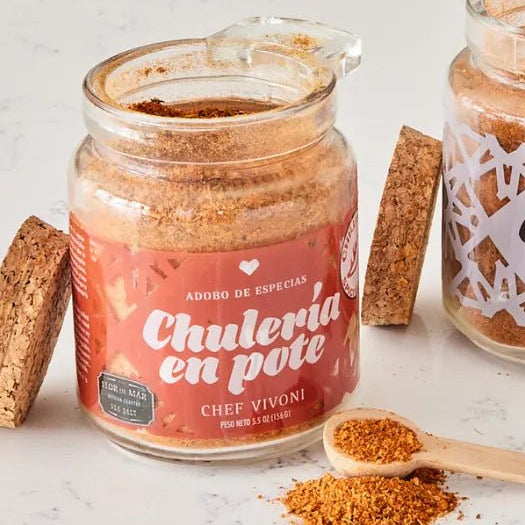
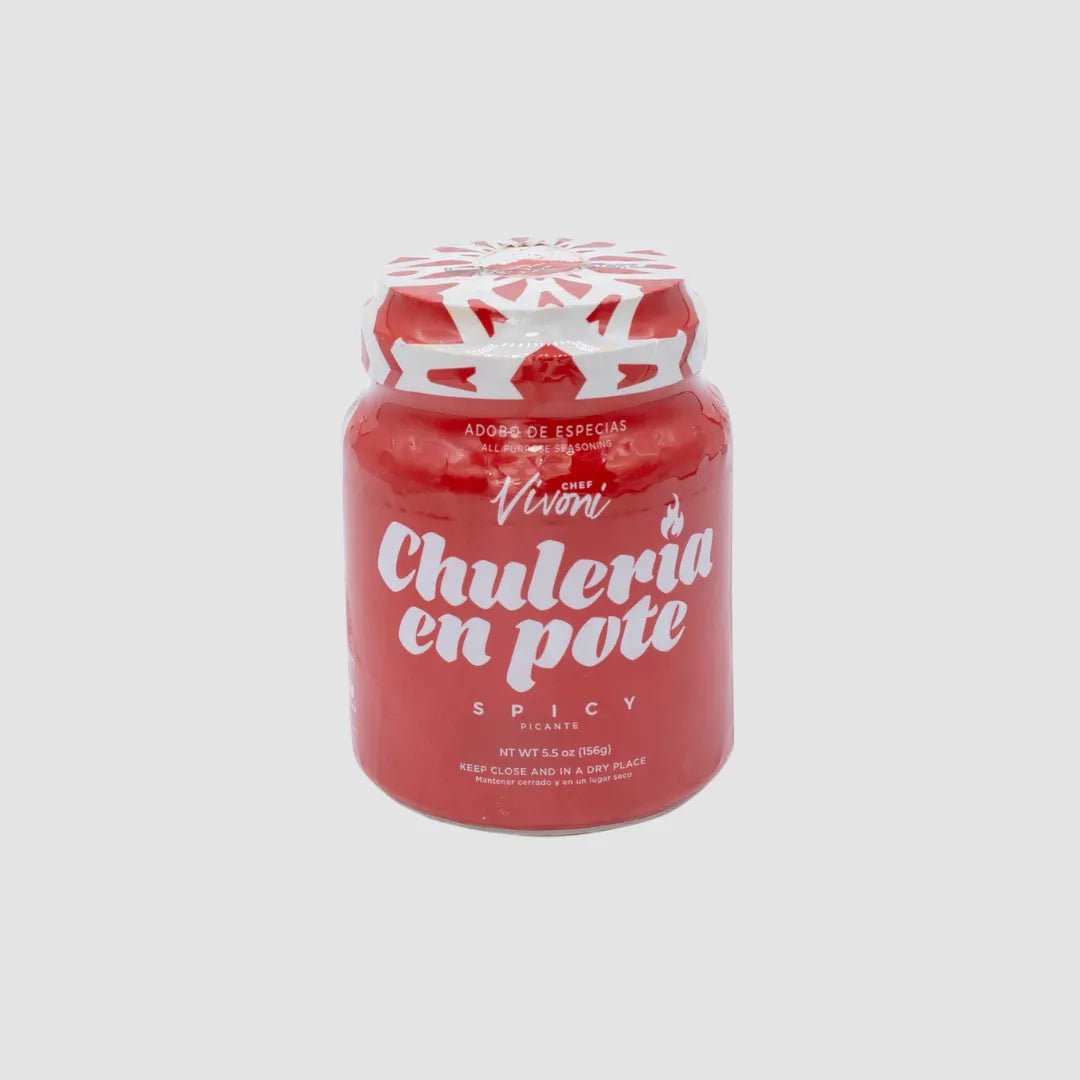
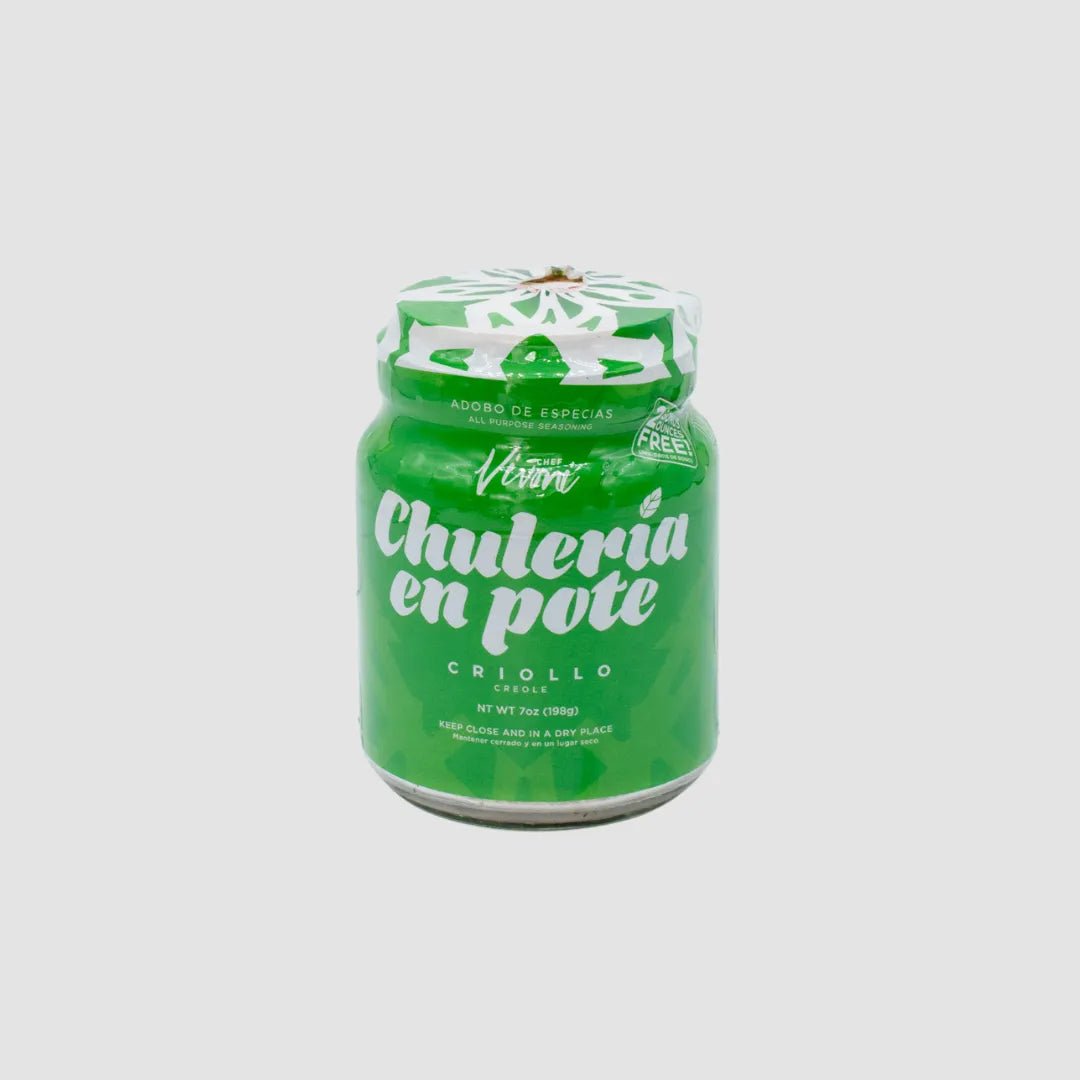
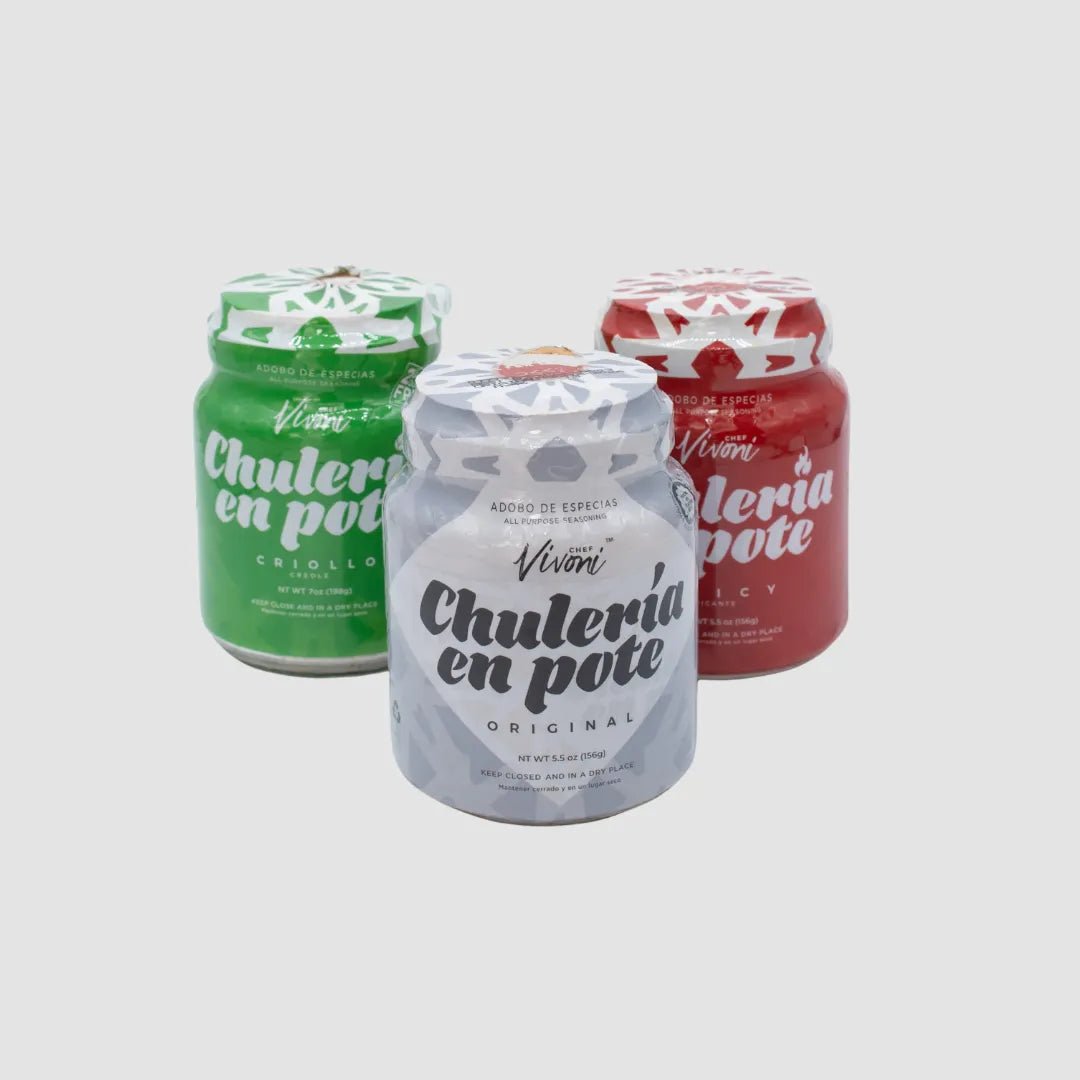
Chef Vivoni's Chulería en Pote is the everyday adobo I use in my Brooklyn kitchen. Made in Puerto Rico, and every jar carries its own ingredient declaration so you can read exactly what is in it. Three blends — Original, Criollo, and Spicy — each one Vivoni's take on a classic Latin all-purpose seasoning.
Shop Chuleria en Pote →Adobo vs Sazón FAQs
What is the difference between adobo and sazón?
Adobo is a dry rub of garlic, oregano, salt, and pepper that goes on the meat before cooking. Sazón is a color and depth builder centered on achiote (annatto) that goes in the dish (rice, beans, stews, sofrito). Adobo seasons proteins. Sazón colors and flavors cooking liquids and rice. Most Latin households use both for the same meal — adobo on the chicken or pork, sazón in the rice or broth.
Can I use adobo instead of sazón (or sazón instead of adobo)?
Not really. They are not interchangeable. Adobo will not give your rice the golden color and earthy depth that sazón provides. Sazón will not give your chicken or pork the surface-level seasoning that adobo creates. If you only have one, you can approximate by adding turmeric and cumin to adobo, or salt and garlic powder to sazón — but the result will not taste the same as using both.
Is adobo or sazón better?
Neither — they do different jobs. Adobo is better for seasoning proteins. Sazón is better for coloring and deepening rice, beans, and stews. The real answer to "which is better" is: you need both. Latin home cooks have used them together for generations because each one solves a problem the other does not.
Are adobo and sazón only Puerto Rican?
No. Both seasonings are pan-Latin pantry staples used across Puerto Rican, Dominican, Cuban, Mexican, Colombian, Venezuelan, and many other Latin American kitchens. Each culture has slightly different applications, but the basic role of each seasoning is the same everywhere: adobo seasons proteins, sazón colors and deepens cooking liquids.
Do you use both adobo and sazón in the same dish?
Yes, most classic Latin meals use both. Example: pernil with arroz con gandules. Adobo goes on the pork shoulder the day before to season the meat. Sazón goes into the rice (in the oil with the sofrito) for color and depth. Both seasonings, doing different jobs, in the same meal.
Why is my Latin rice not yellow enough?
The golden color in Latin rice (arroz amarillo, arroz con gandules) comes from sazón — specifically the achiote (annatto) in it. If your rice is pale, you either skipped the sazón, added it at the wrong time (it needs to bloom in hot oil at the start of cooking, not be sprinkled in at the end), or used a sazón blend with weak achiote content.
Is Goya adobo or sazón unhealthy?
The bigger concerns with commercial Goya products are high sodium content and added fillers, preservatives, or artificial colors, depending on the specific blend. MSG (which appears in some sazón variants) has been widely studied and is regarded as safe by the FDA, but if you want to avoid additives generally, look for blends with shorter, more recognizable ingredient lists. Read the ingredient list on whichever jar you pick — formulations differ by brand and by variant, and they change over time.
How much adobo or sazón should I use?
As a general kitchen guideline, a common starting point for adobo on a protein is around a teaspoon per pound of meat, and for sazón in rice or stew about a teaspoon per two cups of liquid. Amounts vary a lot by recipe, by product and by how salty the blend is, so start light and adjust to taste rather than treating this as a fixed rule. When using both in the same meal, cut any additional salt you add by about half, because both adobo and sazón are salt-forward.
Can I make my own adobo and sazón?
Yes, and it is the cleanest option. Both blends take 5 minutes to make at home using whole ground spices. Adobo: salt, garlic powder, onion powder, oregano, black pepper, turmeric. Sazón: ground annatto, cumin, garlic powder, Mexican oregano, coriander, salt. Both store in airtight jars for 4 to 6 months. See the recipes above for exact ratios.
How long do adobo and sazón last?
Commercial packets and jars last 2 to 3 years unopened. Once opened, both start losing potency after about 6 months. Homemade versions are best within 4 to 6 months. Store in dark, dry cabinets away from heat. If the blend smells like nothing when you open the jar, the spices have lost their oils — time for a fresh batch.
What is the best adobo and sazón brand?
It depends on what matters to you. Goya is the default — most affordable and most available. Loisa ships direct to consumers. Badia is widely stocked. Chulería en Pote is Chef Vivoni's adobo, made in Puerto Rico, and has the strongest tie to Boricua cooking tradition. Whichever you pick, read that jar's own ingredient list: what is in a blend differs by brand and by variant, and it changes over time. For homemade, see the recipes above — the cleanest of all because you control every ingredient.
Where does the word "adobo" come from?
"Adobo" comes from the Spanish verb adobar — to marinate. The technique itself predates Latin American cooking; it originated in Spain as a method of preserving meat by salting and spicing it before refrigeration existed. When Spanish colonization brought the practice to the Americas, Latin cooks adapted it with native ingredients (achiote, oregano brujo) and over generations turned it into the all-purpose seasoning category we know today. The dry powder form we buy in jars is a modern grocery-store evolution; the technique it descends from is centuries old.
Keep Reading
About the author: Hedman Soto is the founder of Hedman Soto, a chef-curated Latin pantry brand featuring Chef Vivoni's Chulería en Pote seasonings and Chef Rafael Ubior's Made By Cooks sauces. He grew up in Aguadilla, Puerto Rico in a family that raised pigs and ran bakeries, and now splits his time between Brooklyn, NY and Asbury Park, NJ. He writes about Latin food from a founder and home cook perspective.