By Hedman Soto · Recipes · 10 min read
The Quick Answer
Tostones are twice-fried green plantain rounds — crispy outside, tender inside — and they are the iconic side dish across the Spanish-speaking Caribbean. The technique most American recipes miss is the step between the two fries: a 5-second dip in salty water that seasons the plantain from the inside and creates the signature shatter-crisp crust. Use deep green firm plantains (never yellow), two different oil temperatures (325°F for the first fry, 350°F for the second), and finish with salt or Chulería en Pote Original. Total time: 30 minutes.
Mom taught me how to make tostones when I was 8, standing on a step stool next to her in our Aguadilla kitchen.
She showed me everything — how to pick the right plantain at the colmado, how hot the oil needed to be, how hard to smash without breaking. But the one thing she made me promise to never forget was the salt water trick. She did not call it a trick. She called it el paso que se olvida — the step everyone forgets. And in her words: "If you forget that step, you're making tostones para los gringos. If you do it, you're making them como dios manda."
I have watched a lot of people make tostones in the 30 years since. Restaurants in San Juan, Cuban abuelas in Union City, Dominican home cooks in the Bronx, food TV chefs in studios. Almost none of them brine the plantain. The handful who do are always Caribbean women over 60. The salt water trick is one of those pieces of cultural knowledge that did not make it into the cookbooks — and that is the entire reason I am writing this guide.
Tostones, patacones, plátanos verdes — they are all the same dish
Before we get into the recipe, the terminology. Across the Spanish-speaking Americas, this dish goes by different names.
- Tostones — Puerto Rico, Dominican Republic, Cuba.
- Patacones — Colombia, Venezuela, Ecuador, Panama, parts of Central America.
- Tachinos — an older Cuban term, less common today.
- Plátanos verdes fritos — the generic descriptor across Latin America.
The dish is the same: green plantain, sliced, fried, smashed, fried again. The technique is the same. The accompaniments differ — in Puerto Rico we eat them with garlic mojo or pernil drippings; Colombians serve them with hogao (tomato-scallion sauce); Cubans pair them with mojo criollo and roast pork. But the dish itself crosses every Caribbean and Latin American kitchen. If you grew up with any of these names, this recipe is yours.
What separates great tostones from good tostones
Most American tostones recipes go: cut, fry, smash, fry, salt, eat. That works. You will get a passable side dish. But there is a noticeable difference between tostones you grew up eating in a Puerto Rican household and tostones you order at a fusion brunch spot. The difference comes down to three things.
The plantain itself. Tostones are only good if the plantain is right. Deep green skin, firm to the squeeze, heavy for its size. If there is any yellow on the skin, the plantain is starting to ripen — sugars are developing — and you will get something closer to maduros than tostones. American grocery stores often sell plantains that are halfway between green and yellow because most American shoppers buy plantains for maduros. Go to a Latin grocery for tostones.
The oil temperature. Most home cooks fry at one temperature throughout. Wrong. The first fry should be gentle (325°F) — you are cooking the plantain through, not browning it. The second fry should be hotter (350°F) — you are creating the crisp shell. Skip the temperature change and you either get plantain that is burned outside and raw inside, or pale tostones that absorb oil and go soggy.
The salt water brine. The step most people skip. The step mom would never let me skip. See below.
In Hedman's Words
"Mom called it el paso que se olvida — the step everyone forgets. If you forget that step, you're making tostones para los gringos. If you do it, you're making them como dios manda."
Mom's salt water trick (the step most American recipes skip)
Here is what the brine actually does — and once you understand the why, you will never make tostones without it again.
Plantains are starchy. Almost all of the seasoning in a typical tostones recipe sits on the outside surface. The interior stays bland no matter how much salt you sprinkle on after frying. You can salt the top of a tostón until it is white, and the second bite — when you reach the inside — still tastes flat. That is the universal complaint about restaurant tostones in non-Latin restaurants. They look right, they crunch right, but they taste under-seasoned in the middle.
The salt water trick fixes both problems at the same time.
What seasons the inside: Between the two fries, after you have smashed the plantain flat, you dip it in salty water for 5 seconds. The starchy interior — now exposed by the smashing and slightly porous from the first fry — absorbs the salt water immediately. Five seconds is enough. Every bite tastes seasoned, not just the surface.
What creates the shatter-crisp crust: When the wet plantain hits 350°F oil for the second fry, the moisture flashes to steam. Tiny steam pockets form in the crust as it sets. The result is a crust with structure — the kind that audibly cracks when you bite it — instead of just a uniform crisp shell.
Pick the right plantain (this is everything)
I will repeat this because the recipe falls apart if this is wrong.
For tostones, you want plantains that are deep green, firm enough that you cannot dent them with thumb pressure, heavy for their size, and ideally still showing some of the rough corky texture on the stem end. If the plantain has even started to develop yellow patches, you are past the tostones window — that plantain will be too sweet, too soft, and it will mash apart when you smash it.
If you cannot find good plantains at your usual grocery, find a Latin market. Bodegas in Puerto Rican, Dominican, or Cuban neighborhoods turn over plantain inventory fast and tend to carry firm green ones because that is what their actual Latin customers ask for. The Latin grocery a few blocks farther than your usual store is worth the extra walk.
Family Recipe
Mom's Tostones
The recipe as mom taught it, translated from her by-eye method into measurements you can follow.
Ingredients (serves 4 as a side)
- 4 green plantains, deep green and firm
- 2 cups neutral oil for frying (vegetable, canola, peanut, or avocado)
- 2 cups room-temperature water — for the brine
- 1 tablespoon kosher salt — for the brine
- Chulería en Pote Original Adobo — for finishing
Equipment
- Heavy-bottomed pot or deep skillet (cast iron is ideal)
- Tostonera (the wooden plantain press) OR the flat bottom of a heavy glass
- Wide shallow bowl for the brine
- Tongs
- Paper towels or a wire rack
Instructions
- Peel and slice the plantains. Cut the ends off each plantain. Score the skin lengthwise in 2 or 3 places (just through the skin, not into the flesh). Pry the skin off in strips — green plantain skin is much tougher than yellow, so this takes effort. Slice the peeled plantain into 1-inch rounds.
- First fry — gentle. Heat 1 inch of oil to 325°F over medium heat. Add the plantain rounds in a single layer — do not crowd. Fry 3 to 4 minutes per side, turning once, until tender when pierced with a fork and pale gold. They should not be brown at this stage. Transfer to paper towels.
- Smash. While the plantains are still warm but cool enough to handle, press each round flat with your tostonera or the bottom of a heavy glass to about 1/4 inch thick. Do not press so hard they break apart at the edges.
- The salt water brine. Stir 1 tablespoon kosher salt into 2 cups room-temp water in a wide bowl until fully dissolved. Dip each smashed plantain fully into the salt water for 5 seconds. Lift out and shake off excess water — do not pat dry. You want the surface damp going back into the oil.
- Second fry — hotter. Bring the oil up to 350°F. Carefully add the brined tostones — they will sizzle dramatically. Stand back. Fry 1 to 2 minutes per side until deeply golden and shatter-crispy. You will hear the difference — they crackle audibly when they are done.
- Finish with Chulería. Transfer to paper towels for just a second to drain. While still hot, sprinkle Chulería en Pote Original generously over the tops. The heat opens the spice oils — you will immediately smell garlic, paprika and cumin. Serve right away.
Serves 4 as a side. Leftover tostones are sad tostones — eat them all at once if you can.
Pro Tip — The Brine Is Not Optional
A lot of recipes you will find online list the brine as "optional." It is not.
The brine is the difference between tostones that taste like home and tostones that taste like a wedding catering tray. Make them once without it, then make them once with it, and you will never skip it again. Mom would be proud.
Garlic mojo dip — mom's three-minute version
Tostones are great alone, but tostones with garlic mojo are transcendent. Mom's mojo is a quick warm garlic-and-lime sauce, not the long-cooked mojo criollo Cubans serve with lechón. Three minutes from start to bowl.
Family Recipe
Mom's Quick Garlic Mojo
The dip that makes every tostones plate disappear faster.
Ingredients
- 4 garlic cloves, smashed and minced
- 1/4 cup olive oil
- 2 tablespoons fresh lime juice (about 1 lime)
- 1/2 teaspoon Chulería en Pote Original
- Pinch of kosher salt
Instructions
- Warm the olive oil in a small pan over low heat — not hot, just warm.
- Add the minced garlic and let it sizzle for 30 seconds. You want it fragrant, not browned. Pull the pan off the heat.
- Stir in the lime juice, Chulería, and salt. The mixture will hiss a little when the cold lime hits the warm oil. That is correct.
- Let it sit 2 minutes for the flavors to combine. Pour into a small bowl for dipping.
Makes enough for one batch of tostones. Doubles easily if you are feeding a crowd.
Tostones across Latin America — how different countries do it
Same dish, slightly different traditions depending on which Latin culture is making them. Here is the breakdown.
The salt water brine is most strongly associated with Puerto Rican home cooking — though I have met Dominican abuelas who do it too. Cuban tostones traditions tend to skip it.
Pro tips from mom's kitchen
- Plantain ripeness is the #1 thing. If you remember nothing else, remember: deep green only.
- Do not skip the brine. It is the single most important step. I will keep saying it.
- Two different oil temperatures. 325°F for the first fry, 350°F for the second. Use a thermometer if you have one.
- Do not crowd the pot. Plantain pieces touching each other steam instead of fry. Work in batches.
- Season while hot. Chulería sticks better and the spices bloom more aromatic when the tostones are still steaming.
- Eat them immediately. Tostones lose their magic in 10 to 15 minutes. Build your meal around them, not the other way around.
What to serve with tostones
Tostones rarely show up alone. In our house they were a constant side dish — always next to something heavier and richer. Some pairings that have always worked.
- Pernil. The classic Sunday combination — crispy tostones with slow-roasted pork shoulder and a side of garlic mojo for dipping. See my full pernil recipe for the spread.
- Churrasco. Skirt steak, chimichurri, tostones, an ice-cold Medalla. The Friday-night plate.
- Fried chicken. Dominican-style with sazón and a squeeze of lime. The pairing every Caribbean culture agrees on.
- Habichuelas guisadas + arroz. Beans, white rice, tostones on the side, hot sauce on the table. The cheap meal that is also one of the best meals.
- Eggs at breakfast. Tostones topped with a fried egg, avocado slices, and hot sauce.
- Just garlic mojo. A weeknight snack while you finish making dinner.
A Chef-Curated Finishing Touch
The seasoning mom would have reached for
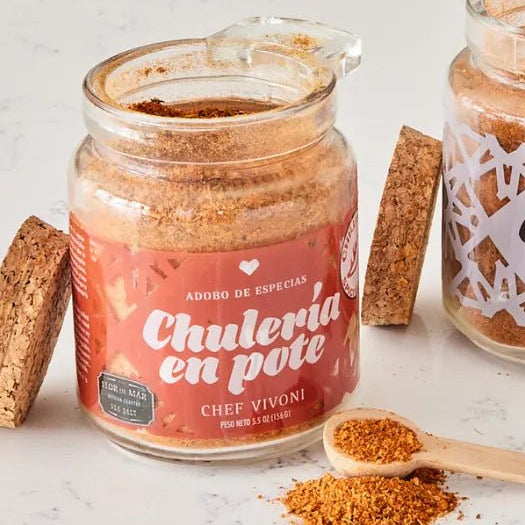
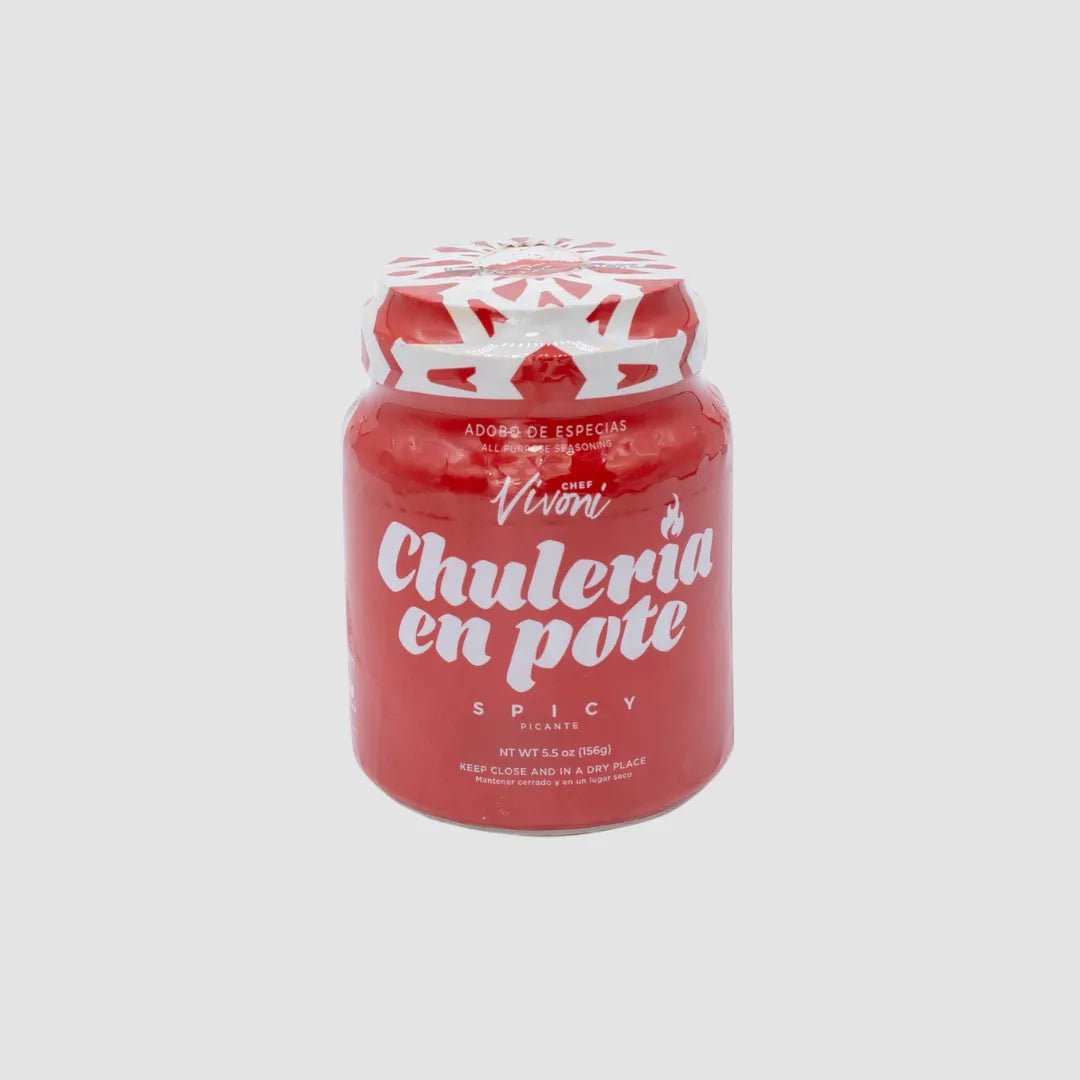
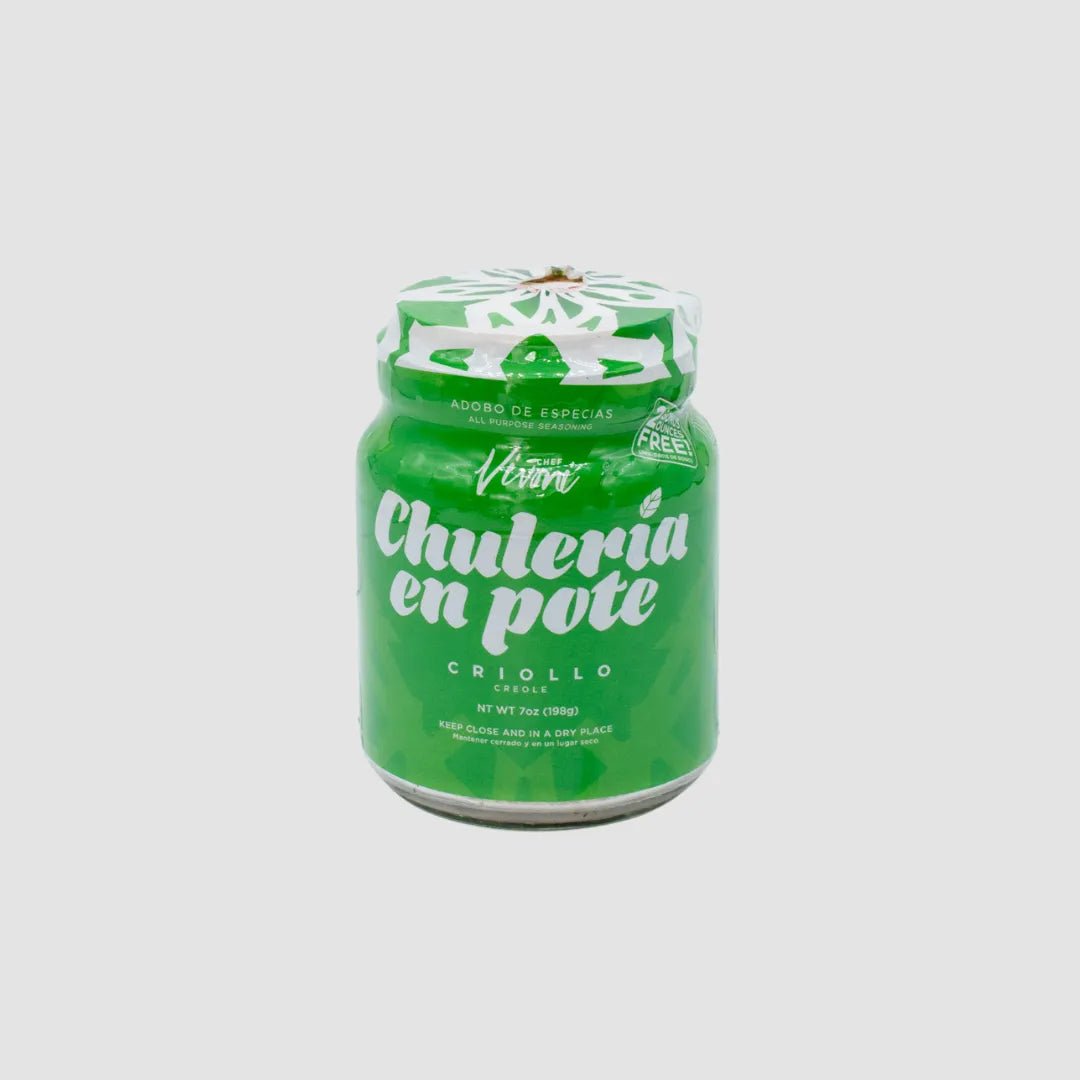
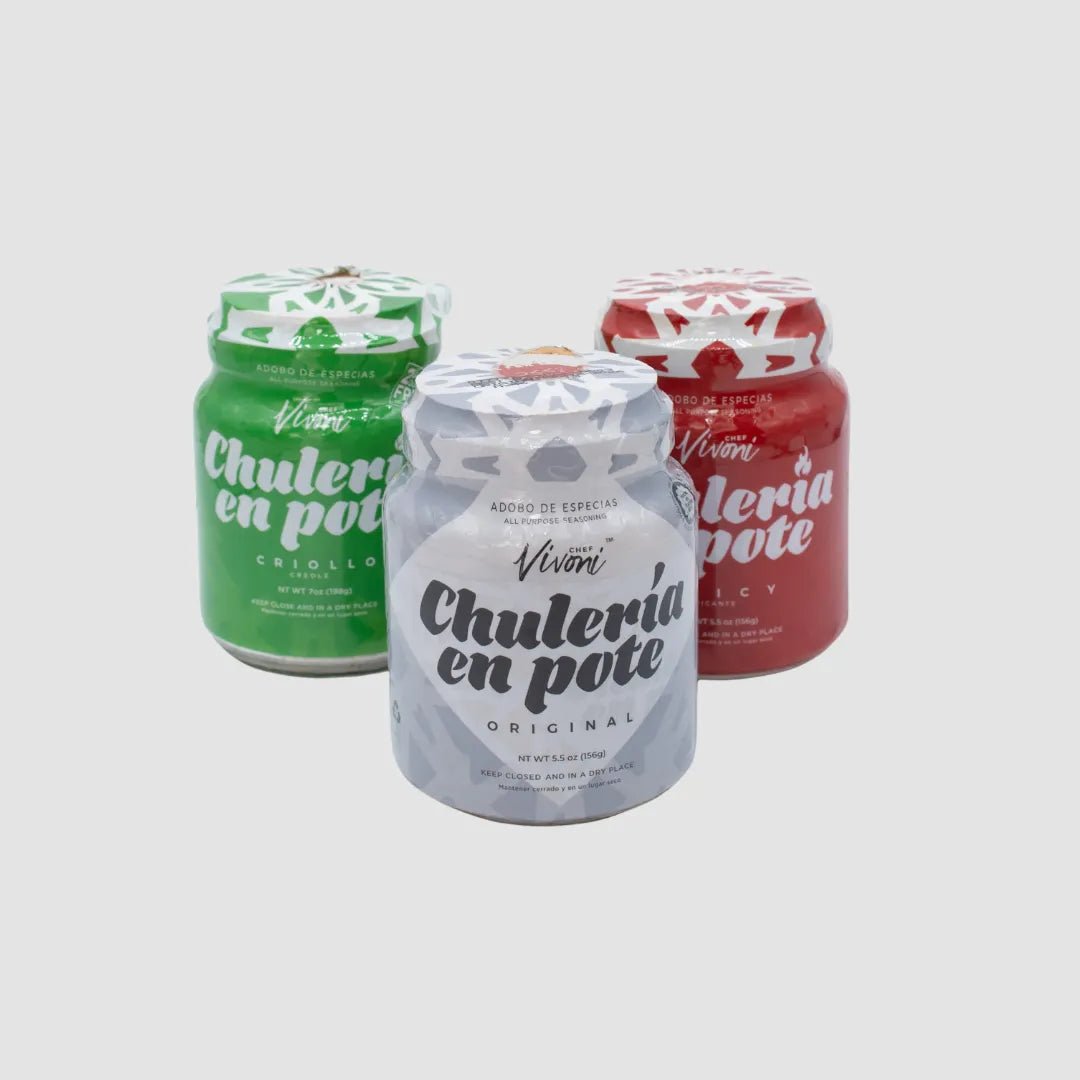
Chef Vivoni's Chulería en Pote Original is the all-purpose Puerto Rican adobo I sprinkle on tostones the moment they come out of the oil. Salt, paprika, turmeric, onion, garlic and a little coffee. Packed in Puerto Rico.
Shop Chuleria en Pote →Tostones FAQs
What is the difference between tostones and patacones?
They are the same dish. Tostones is the name used in Puerto Rico, the Dominican Republic, and Cuba. Patacones is what they are called in Colombia, Venezuela, Ecuador, Panama, and parts of Central America. The plantain, the technique, and the result are identical. The difference is regional vocabulary.
Why do tostones come out greasy?
Two most common reasons. First: oil too cold for the second fry. If the oil is below 350°F, the plantain absorbs oil instead of forming a crust. Second: overcrowding the pan. When plantains touch each other, they steam and never fully crisp. Fry in batches with at least an inch between pieces.
Can I make tostones with yellow plantains?
No. Yellow plantains are starting to ripen — sugars are developing in the flesh. They are too soft to hold their shape when you press them and too sweet to taste right. Yellow plantains are for maduros (the sweet caramelized version). For tostones you need deep green, firm plantains.
What oil should I use for tostones?
Any neutral, high-smoke-point oil works: vegetable, canola, peanut, avocado, or sunflower. Avoid olive oil (smoke point is too low and the flavor competes) and coconut oil (the flavor is too strong). Mom always used vegetable oil because that is what was in the cabinet.
Why does the salt water brine matter so much?
Two reasons. One: the salt water seasons the inside of the plantain. Without it, your tostones taste seasoned on the outside but bland in the middle no matter how much salt you sprinkle on top. Two: the moisture creates micro-steam pockets in the crust during the second fry, which gives the tostones their signature shatter-crisp texture. Skip the brine and you get good tostones. Use it and you get great ones.
How long does the salt water brine need to be?
Five seconds. That is it. The salt water absorbs almost immediately because the starchy interior is exposed by the smashing. Longer than 10 seconds and the plantain starts to get too waterlogged, which makes the second fry splash dangerously.
Can I make tostones in an air fryer?
Yes, but they will not be as good as deep-fried. The texture is lighter — closer to baked than fried. If you want to try: air-fry the slices at 375°F for 8 minutes, smash, brine, then air-fry again at 400°F for 5 minutes. Spray lightly with oil between fries.
How do I store leftover tostones?
Tostones lose their crispness within 30 minutes — they are not a make-ahead food. Store at room temperature uncovered (covering traps moisture and turns them soggy) and reheat at 400°F for 5 minutes if needed. They will not be the same.
Keep Reading
About the author: Hedman Soto is the founder of Hedman Soto, a chef-curated Latin pantry brand featuring Chef Vivoni's Chulería en Pote seasonings and Chef Rafael Ubior's Made By Cooks sauces. He grew up in Aguadilla, Puerto Rico, and splits his time between Brooklyn, NY and Asbury Park, NJ. He writes about Latin food from a founder and home cook perspective.