By Hedman Soto · Food Guides · 11 min read
The Quick Answer
Sazón is the Latin pantry seasoning that gives arroz con gandules its signature yellow color and gives habichuelas (beans), pernil, and dozens of other dishes their deep savory base flavor. The color comes from achiote (annatto). It is not exclusive to Puerto Rico — Mexicans, Cubans, Dominicans, Colombians, and most Latin households across the Americas reach for it. The most popular brand is Goya, which has been the default Latin pantry sazón since the 1960s. Sazón is also not the same as adobo: sazón goes in the dish for color and depth, adobo goes on the meat for surface seasoning.
Sazón has been present in my life since I have memory.
My mom used it. My dad used it. My entire family used it. In our house in Aguadilla, it was always in the cabinet — those little colored packets, the yellow Goya box. My mom would grab one without thinking before starting her arroz con gandules. Without sazón, there is no color or deep flavor in the food we grew up eating.
When I moved to New York in 2011, the surprising part wasn't that other Latinos used sazón. It was that everyone knew Goya. My Mexican friends, my Cuban friends, my Dominican friends, the Colombian guy at work — we all grew up with the same yellow packets. That's when I realized sazón isn't a Puerto Rican thing. It's a Latin thing. Which is the entire reason I'm writing this guide as a pan-Latin explainer instead of a PR-only one.
What's actually in sazón?
Most commercial sazón blends contain a version of these ingredients:
- Achiote (annatto) — the orange-red seed that gives sazón its signature yellow color when mixed into oil or liquid. Grown across the Caribbean and Latin America. This is the most important ingredient.
- Cumin — earthy and warm, provides a savory backbone.
- Garlic powder — the universal Latin flavor base.
- Coriander — citrusy and light, cuts the richness of the warming spices.
- Mexican oregano — different from Mediterranean oregano. Earthier and more citrusy.
- Salt — always.
- MSG — present in most commercial brands including the classic Goya recipe. More on this below.
The proportions change based on the specific sazón variant. Goya alone makes at least six versions — culantro y achiote, con azafrán, sin sal, and others. Each adjusts the balance. Some include dehydrated tomato. Some skip cumin entirely. There is no single "correct" formula.
Worth knowing: the "azafrán" listed on some sazón packets is technically not Spanish saffron — it's safflower or annatto labeled as azafrán by cultural convention. Real Spanish saffron is too expensive to use in commercial sazón.
In Hedman's Words
"Sazón has been present in my life since I have memory. Without it, there is no color or deep flavor."
Where sazón actually comes from
Sazón as we know it — the powdered packet form — is a modern grocery-store product. But the flavors in it are old.
Achiote was used by the indigenous peoples of the Caribbean and South America for centuries before Spanish colonization, both as a food coloring and as body paint. The Spanish brought cumin, oregano, and coriander to the Americas during the colonial period. The blend evolved as Caribbean and Latin American cuisines fused indigenous, African, Spanish, and Asian influences.
Goya, founded in 1936 in lower Manhattan by Spanish immigrants Don Prudencio Unanue and his wife Carolina, popularized the packaged sazón format starting in the 1960s and 1970s. They didn't invent sazón. They standardized and distributed it at scale. That is why almost every Latin household in the U.S. — Puerto Rican, Cuban, Mexican, Dominican, Colombian — has had a yellow Goya box in the pantry for the last three generations.
How Latin families actually use sazón
Different Latin cultures use sazón in slightly different ways. Here is the cross-cultural breakdown.
Puerto Rico
Sazón is in everything that needs golden color or deep base flavor. The classic uses:
- Arroz con gandules — the iconic rice with pigeon peas. The yellow comes from sazón. This is the dish my mom is known for, and the first one I make when I'm homesick.
- Habichuelas guisadas — stewed beans. Sazón gives the broth its richness, often paired with recao for fresh herbal depth.
- Christmas pernil — slow-roasted pork shoulder. Sazón goes into the marinade; adobo handles the surface seasoning.
- Asopao — Puerto Rican rice soup. Sazón anchors the broth.
Cuba
Sazón is used similarly but more sparingly. Cuban cuisine builds flavor from sofrito first (oil, onion, garlic, green pepper, tomato) and then adds sazón for color in dishes like arroz amarillo and Moros y Cristianos (black beans and rice). Cubans are less likely to use sazón in marinades.
Dominican Republic
Sazón is a daily staple in dishes like la bandera dominicana (rice, beans, meat). Dominican home cooks often mix sazón directly into sofrito to give it color before it touches the rice or beans.
Mexico
Mexican cooks use sazón, but it is not central to traditional Mexican cuisine the way it is in Caribbean cooking. Mexican Americans (especially in the Southwest) have absorbed sazón through cross-cultural influence and use it in rice dishes and marinades. Traditional Mexican cooking gets color from dried chiles, achiote pastes (cochinita pibil), and regional seasonings rather than the packet form of sazón.
Colombia, Venezuela, and beyond
Sazón is common in urban kitchens but less central to traditional cooking. Colombian cuisine often gets color from achiote oil rendered fresh at home, similar to what I do when I want to skip the packet (more on that below).
Adobo vs. sazón — the #1 confusion
When someone non-Latino asks me "what's sazón," the question that always follows is "wait, isn't that the same as adobo?" No. They're different tools that do different jobs.
The short version: sazón goes in the dish, adobo goes on the meat. Most Latin households use both for the same recipe. For Christmas pernil, my family adobo's the pork the day before, then sazón goes into the marinade and pan juices.
For the full breakdown, see Adobo vs Sazón: The Complete Latin Seasoning Guide.
3 essential ways to use sazón
These are the three uses that get sazón into your weekly rotation. Start with these, master them, then experiment.
Family Recipe
1. Yellow Rice (arroz amarillo)
The foundation of arroz con gandules. Once you nail this, you have the base for half of Puerto Rican cooking.
Ingredients
- 1 cup white rice (medium-grain or long-grain)
- 2 tablespoons olive oil or achiote oil
- 2 tablespoons sofrito (or 1 small chopped onion + 2 cloves garlic if no sofrito)
- 1 packet sazón (or 1 teaspoon homemade — recipe below)
- 2 cups water or chicken stock
- 1/2 cup gandules (pigeon peas) — optional but classic
Instructions
- Heat the oil in a medium pot. Add sofrito and sauté 2 minutes until fragrant.
- Add the dry rice and sazón. Toast for 1 minute, stirring so every grain gets coated and yellow.
- Add the liquid and gandules. Bring to a boil, then reduce to low and cover. Cook 18 to 20 minutes.
- Don't lift the lid for the first 15 minutes. Let it steam.
- Fluff with a fork. The crusty bottom (pegao) is the best part.
Serves 3 to 4. Pairs with pernil, chicken, or anything that has its own broth.
Family Recipe
2. Habichuelas Guisadas (stewed beans)
Latin weeknight signature. Cheap, filling, and freezes well. Sazón + recao is the magic combination.
Ingredients
- 1 can pink, red, or pinto beans (drained and rinsed)
- 2 tablespoons olive oil
- 2 tablespoons sofrito
- 1 packet sazón
- 1/4 cup tomato sauce
- 1 cup water
- 1 chunk of calabaza (squash) — optional but adds depth
- A few leaves of recao (culantro) if you have it
Instructions
- Heat oil and sauté sofrito 2 minutes.
- Add sazón, tomato sauce, and water. Simmer 5 minutes.
- Add beans, calabaza, and recao. Simmer 15 to 20 minutes until thickened.
- Taste and adjust salt. Serve over white rice.
Serves 3 to 4. Leftover habichuelas reheat beautifully the next day — flavor actually deepens overnight.
Family Recipe
3. Marinade for Chicken, Pork, or Fish
The same marinade base my family uses for Christmas pernil. Scales up or down for any protein.
Ingredients (for 2 to 3 lbs protein)
- 2 packets sazón
- 1 tablespoon adobo seasoning
- 4 cloves garlic, minced
- 1/4 cup olive oil
- Juice of 1 orange + 1 lime
- 1 tablespoon Mexican oregano
- Salt and pepper to taste
Instructions
- Whisk all marinade ingredients together.
- Pour over protein. Massage in so every surface is coated.
- Refrigerate at least 4 hours, ideally overnight (24 hours for pernil-style cuts).
- Cook however you like — grilled, roasted, slow-cooked. The sazón color stays vibrant through cooking.
Marinade keeps in the fridge for 3 days unused. Don't reuse marinade that's touched raw meat.
Pro Tip — Sofrito vs Sazón
Sofrito and sazón are not substitutes. You use them together.
Sofrito is a fresh chopped aromatic base (onion, garlic, peppers, recao, sometimes tomato) sautéed in oil. It builds depth from the ground up. Sazón is a dried seasoning blend that adds color and final-touch savory depth. In most classic Puerto Rican dishes, you sauté the sofrito first, then add sazón. Sofrito is the foundation. Sazón is the finishing layer.
The MSG question (and why it matters less than you think)
Almost every commercial sazón sold in the U.S. contains MSG (monosodium glutamate). Goya. Sazón Sabrosita. Iberia. The classic Goya box that's been in my family's pantry for decades has MSG as a key ingredient.
As I get older I get more educated about what I put in my body. The MSG itself isn't actually dangerous — the "MSG is bad for you" narrative from the 1960s and 70s has been thoroughly debunked by modern food science. MSG is glutamate, the same amino acid found in tomatoes, mushrooms, and Parmesan.
The bigger issue with commercial sazón isn't the MSG specifically — it's the additional ingredients added to enrich flavor and cut costs. Dehydrated tomato shortcuts. Preservatives. Color stabilizers. Cornstarch fillers. What I really want is a clean sazón made with real achiote, real garlic, real cumin, in real proportions — nothing else. I still use commercial sazón for specific dishes that absolutely need it (the yellow rice, habichuelas with recao, Christmas pernil). For everything else I substitute with achiote oil I make at home — just sauté annatto seeds in olive oil for 5 minutes, strain out the seeds, save the oil.
What to look for on the label
If you're going to buy sazón, the single best piece of advice I can give you about Latin pantry shopping is this:
Read the ingredient label. If you can't pronounce an ingredient or don't know what it is, put the packet back on the shelf. Real sazón doesn't need 14 ingredients. It needs maybe 6 to 8.
What you WANT to see on a clean sazón label
- Achiote or annatto
- Cumin
- Garlic powder
- Oregano (Mexican, preferably)
- Coriander
- Salt
- Black pepper (sometimes)
Yellow flags (acceptable but worth knowing)
- MSG — not unsafe, but if you want to avoid it, skip
- "Natural flavors" — vague catch-all, usually fine
Red flags (skip these brands)
- Yellow #5, Red #40 (artificial colors masking weak achiote)
- Hydrolyzed soy or corn protein (cheap flavor extender)
- Maltodextrin or modified corn starch (filler)
- Sodium silicoaluminate (lab-derived anti-caking agent)
- Anything you wouldn't recognize as food
Family Recipe
Homemade Sazón (5 minutes, no MSG, no fillers)
Make a small jar of this and use it like you'd use Goya. The color won't be quite as vibrant as commercial (because Goya uses concentrated achiote and color stabilizers), but the flavor is fresher and you control every ingredient.
Ingredients (makes about 1/2 cup)
- 2 tablespoons ground annatto (achiote) — find at any Latin supermarket or online
- 2 tablespoons ground cumin
- 2 tablespoons garlic powder
- 1 tablespoon Mexican oregano
- 1 tablespoon ground coriander
- 1 tablespoon kosher salt
- 1 teaspoon black pepper
- Optional: 1 teaspoon turmeric for extra color depth
Instructions
- Combine all ingredients in a small bowl. Stir until evenly blended.
- Store in an airtight glass jar in a dark cabinet.
- Use 1 teaspoon to replace 1 commercial sazón packet.
- Refresh the jar every 4 to 6 months — after that the cumin starts losing punch.
This recipe scales perfectly. Double or triple if you cook with sazón weekly.
Where sazón fits in your Latin pantry
If you're building a Latin pantry from scratch, here's the priority order based on what gets used most in real Latin home cooking:
- Adobo — universal meat seasoning
- Sazón — the color and cooked-in flavor builder
- Sofrito — fresh aromatic base (best made at home or bought refrigerated)
- Recao — fresh herb for stews and beans
- Achiote oil — the homemade version of "just the color" of sazón
- Mexican oregano — different from Mediterranean
For the complete starter kit and where to buy each item, see our Puerto Rican pantry essentials guide.
A Chef-Curated Alternative
If you want a cleaner sazón built by a Puerto Rican chef
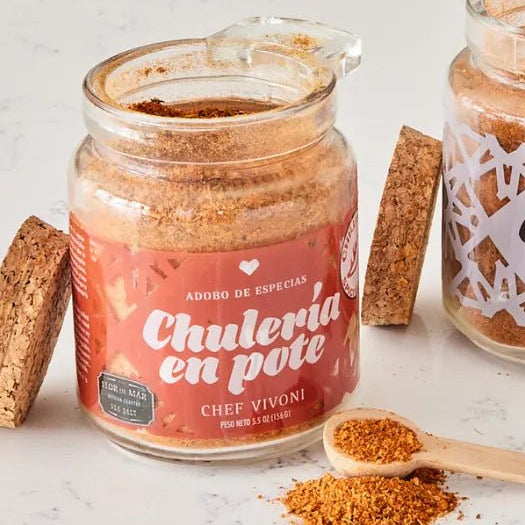
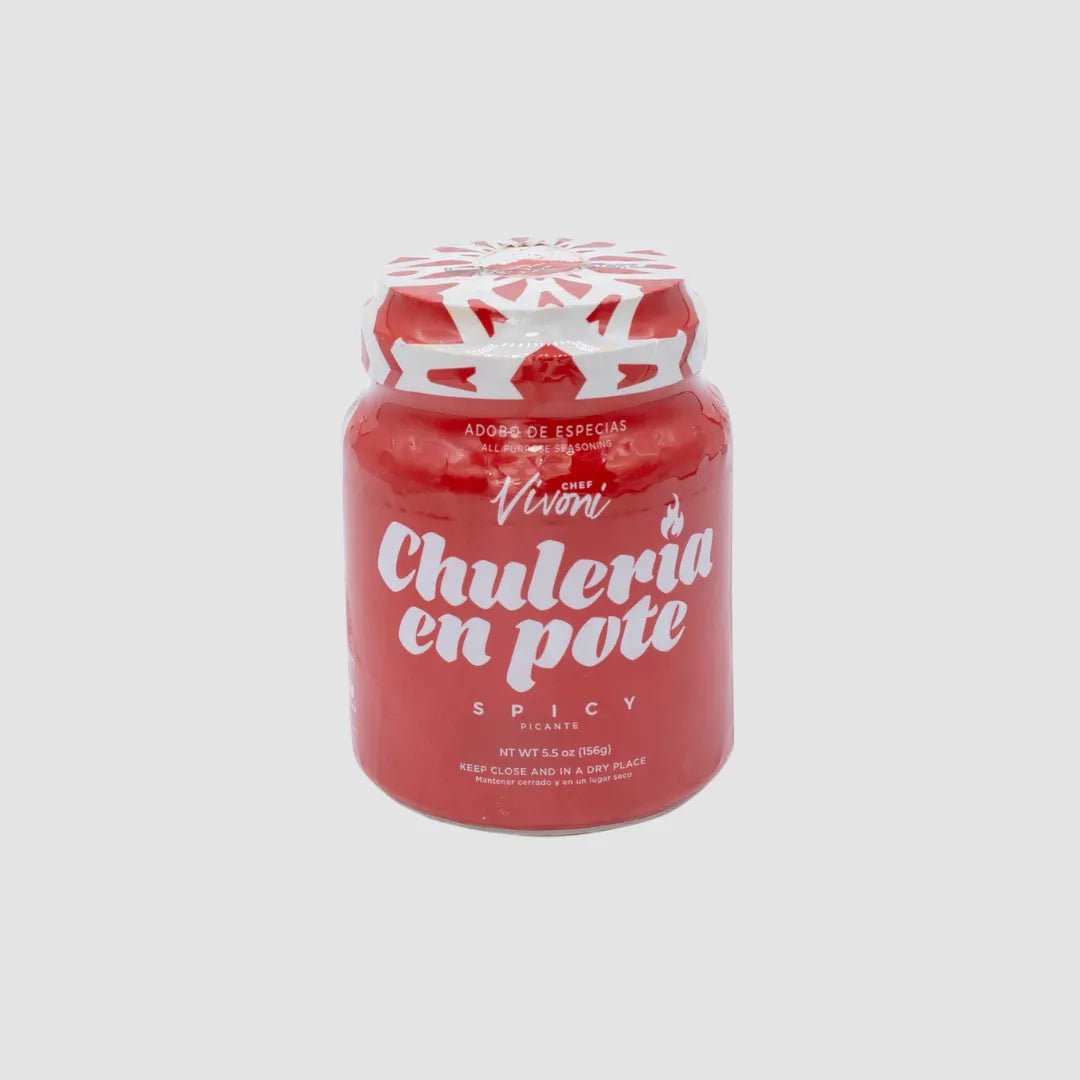
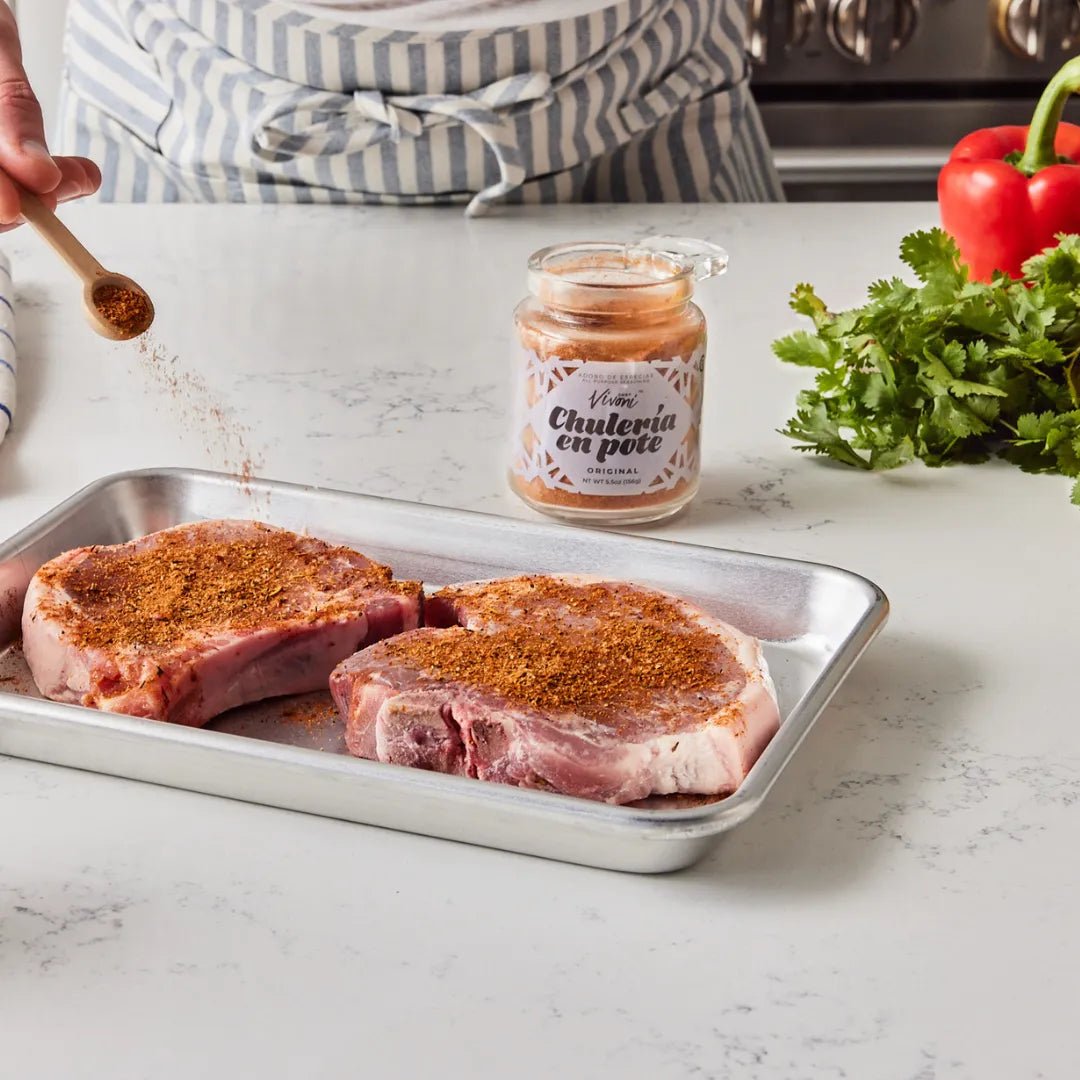
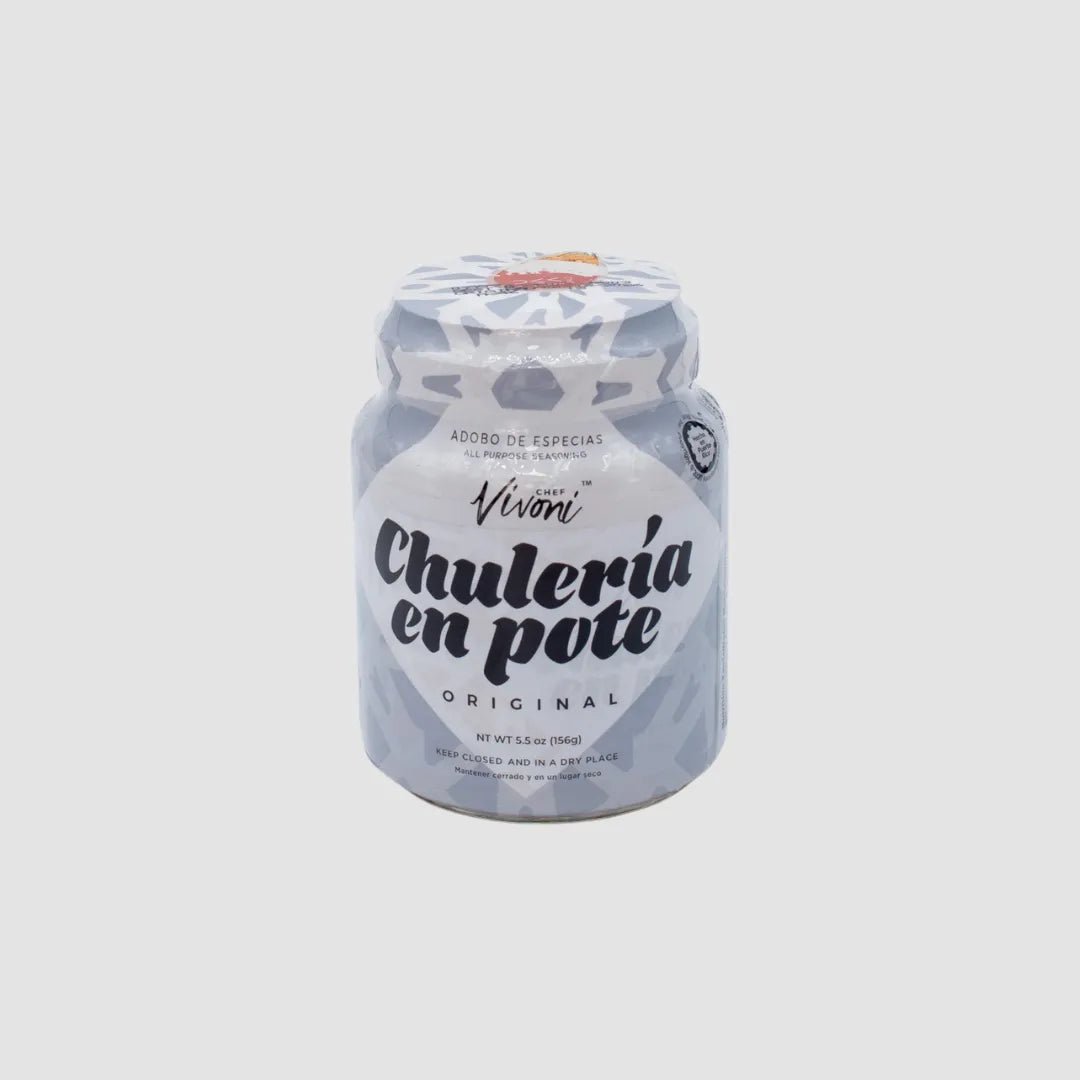
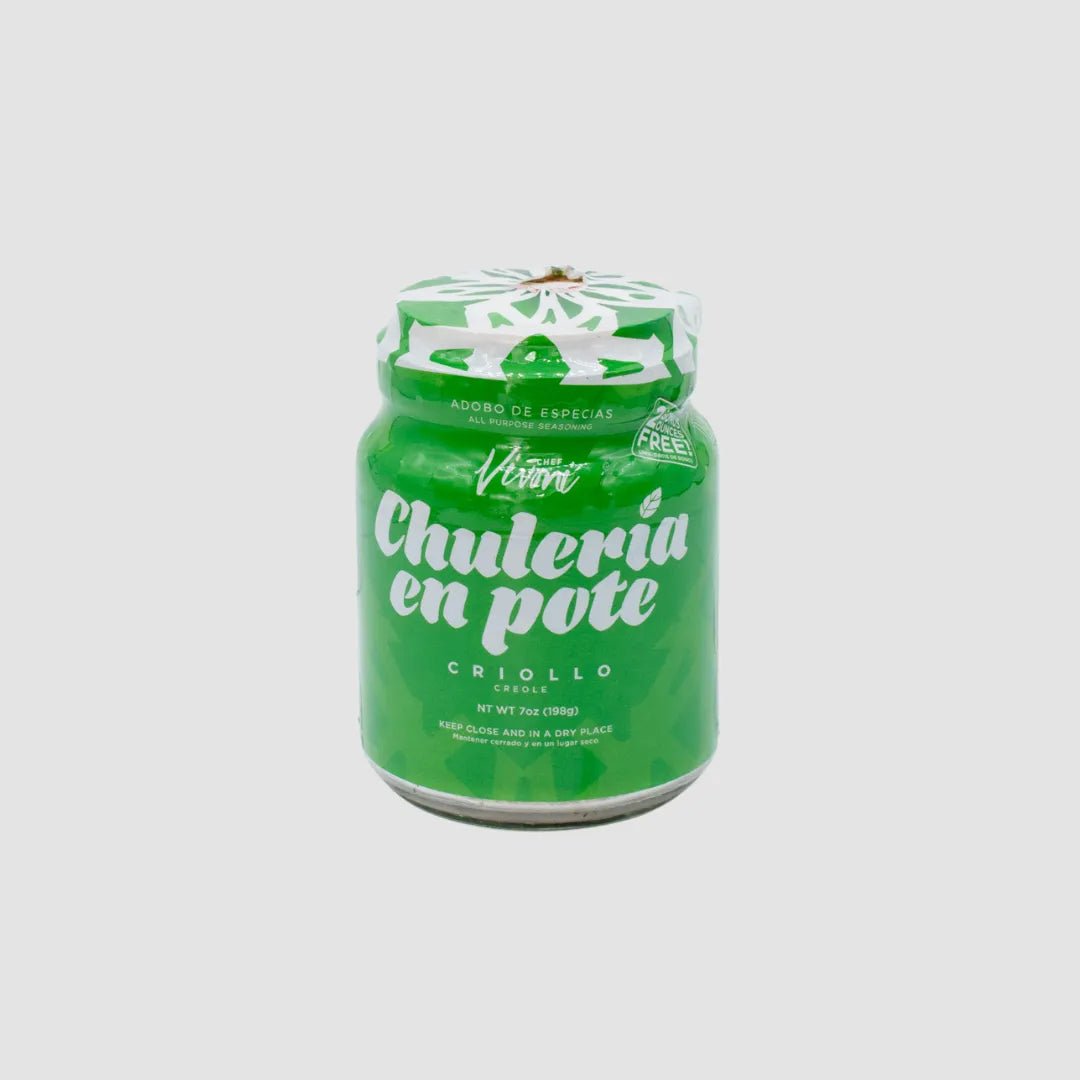
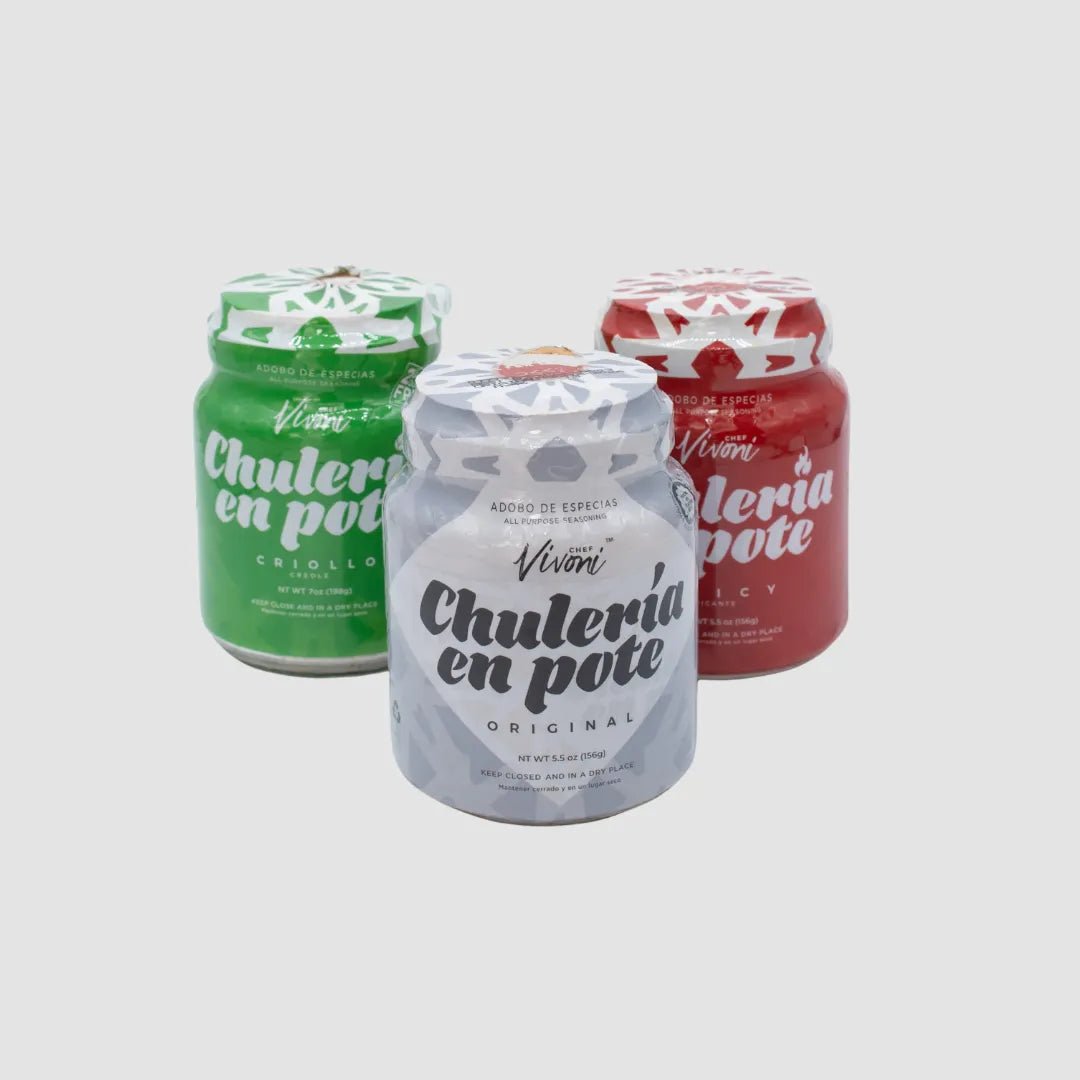
Chef Vivoni's Chulería en Pote is the seasoning I reach for when I want sazón-style depth without the commercial fillers. It's an all-purpose Boricua seasoning — formulated with real ingredients, no MSG. It's the product that started this brand.
Shop Chuleria en Pote →Sazón FAQs
Is sazón Mexican or Puerto Rican?
Neither, originally. Sazón is a pan-Latin seasoning blend that evolved from indigenous Caribbean and Latin American use of annatto, combined with Spanish-introduced cumin and oregano. Goya popularized the modern packet form starting in the 1960s. Today it is used across virtually every Latin American culture, with slight variations in how each country uses it.
What is sazón made of?
Most sazón blends contain achiote (annatto, for color), cumin, garlic powder, Mexican oregano, coriander, and salt. Commercial brands often add MSG, natural flavors, and sometimes artificial colorings or fillers. Always read the label.
Can I substitute turmeric for sazón?
Turmeric will give you yellow color but not the savory complex flavor of sazón. You can use a mix of turmeric, cumin, garlic powder, and salt as a quick substitute, but it will not taste the same. Better to make a real homemade sazón blend with annatto, cumin, garlic powder, Mexican oregano, coriander, and salt.
Is sazón unhealthy because of MSG?
MSG itself has been scientifically debunked as harmful. It is a naturally-occurring amino acid found in tomatoes, mushrooms, Parmesan, and other foods. The real health concerns with commercial sazón are more about sodium content and added fillers, preservatives, and stabilizers, not the MSG specifically. If you want cleaner sazón, make your own or look for brands with short, recognizable ingredient lists.
What is the difference between sazón and adobo?
Sazón goes in the dish (rice, beans, stews, marinades) and adds color and deep flavor. Adobo goes on the meat as a surface rub before cooking. Most Latin households use both for the same recipe.
Can I use sazón without MSG?
Yes. Several brands now offer MSG-free sazón — Loisa is one popular option. Always read the full ingredient list for fillers and additives. You can also make your own using annatto, cumin, garlic powder, Mexican oregano, coriander, salt, and black pepper in about 5 minutes.
How long does sazón last?
Commercial packet sazón lasts 2 to 3 years unopened. Once opened, the spices start losing potency after about 6 months. Homemade sazón made with whole ground spices stays fresh for 4 to 6 months in a sealed jar in a dark cabinet.
Do I need sazón to make Puerto Rican food?
For arroz con gandules, habichuelas guisadas, and asopao, sazón is essentially required for the color and depth. For other dishes like pernil, mofongo, or alcapurrias, sofrito and adobo do most of the work and sazón is optional. If you're cooking Caribbean food regularly, having sazón in the pantry is non-negotiable.
Keep Reading
About the author: Hedman Soto is the founder of Hedman Soto, a chef-curated Latin pantry brand featuring Chef Vivoni's Chulería en Pote seasonings and Chef Rafael Ubior's Made By Cooks sauces. He grew up in Aguadilla, Puerto Rico, and splits his time between Brooklyn, NY and Asbury Park, NJ. He writes about Latin food from a founder and home cook perspective.